by Yvonne Osborne
You can’t blame a writer for what the characters say.
– Truman Capote
How important is the relationship between a writer and their character? What is the Zone? If you’re a writer, have you been there? If you’re a reader, have you? They are first-cousin related. Let’s go!
What is the “Zone”?
When a writer’s fingers fly across the keyboard to keep up with their racing thoughts, and they don’t know where the story’s going only that the writing is exhilarating, they’re in The Zone. Spelling and punctuation are irrelevant (insidious AI mistakes and assumptions can be cleaned up later), and it doesn’t matter if it makes sense. Sense has no place in the zone. Sense comes later in editing stages, along with punctuation and sentence structure. The zone is a writer’s paradise, free of such impediments as punctuation, sensibility, and sentence structure. All that matters is the Rule of Three—getting the character of a tree, throwing stones at him, and getting him down.
Like a writer in the zone, a reader lost in a book is transported to another world. From the comfort of an armchair or cozied up in bed with a light, they travel to a different time. They are dropped head-first into another culture and circumstance, thick as thieves or beleaguered as migrants, they climb the tree in a shared pursuit.
You Need to Know the Rules Before You Break Them
I learned from authors Chris Whitaker, Peter Heller, and Sally Rooney that one of the cardinal rules of grammar—the sentence fragment no-no—is not so cardinal after all. But as with all writing rules, you can only ignore them if first you know them. As a relatively new author, I still use sentence fragments with caution, the old guilt instilled by my ninth grade English teacher, Mrs. Wood. She had an obsession for diagraming sentences, and that guilt has the staying power of other rules instilled by the grammarians of our upbringing. But as those authors have shown, the sentence fragment can be a useful device in a writer’s toolbox to indicate acceleration and immediacy of events.
What does matter in this early stage is character. Are they believable, three-dimensional, and interesting? Do you love them and all their foibles? If we writers love our characters but allow them to do stupid shit, then there’s a good chance our reader will care about them too.
Falling in Love With Your Character
The relationship writers have with their characters is a real relationship. That is, it has elements of actual love in it. Some may think that because a character isn’t real, the emotions can’t be either. But they can. It’s not like parent/child love, or romantic love, or human/dog love, nothing like that. It is its own thing. It’s writer/character love, and while one-way only, it is real, and it is powerful. To have that kind of loving relationship on tap is a gift writers have.
When immersed in writing a novel in deep third person point of view, I feel closer to my characters than the real people in my life. I think about them all the time, take them to bed with me and into the shower with me. I drive fearlessly down strange, darkened inner-city streets because that’s where my character lives.
One night, when driving through the city of Detroit, I came upon a detour that took me off the main highway onto the surface streets of the inner city. Normally this would have alarmed me, but when I realized this was my character’s neighborhood, I loosened my knuckles on the wheel. I knew where I was. This was his street, his corner store, his favorite hang-out. It was safe and familiar because I had transcended from writing in the zone to living it. The writing had infused me with the gift of courage.
It’s difficult to explain, but I wanted to show how writers can and do fall in love with their characters, which enables the reader to care about them too. Character love is real and intrinsic, developed and strengthened while writing in the zone. Up a tree together, we are fearless.
***
by Yvonne Osborne (@YvonneTOsborne) August 8, 2026
What about you, scriveners? Do you fall in love with your characters? How do you feel about sentence fragments?
About Yvonne Osborne
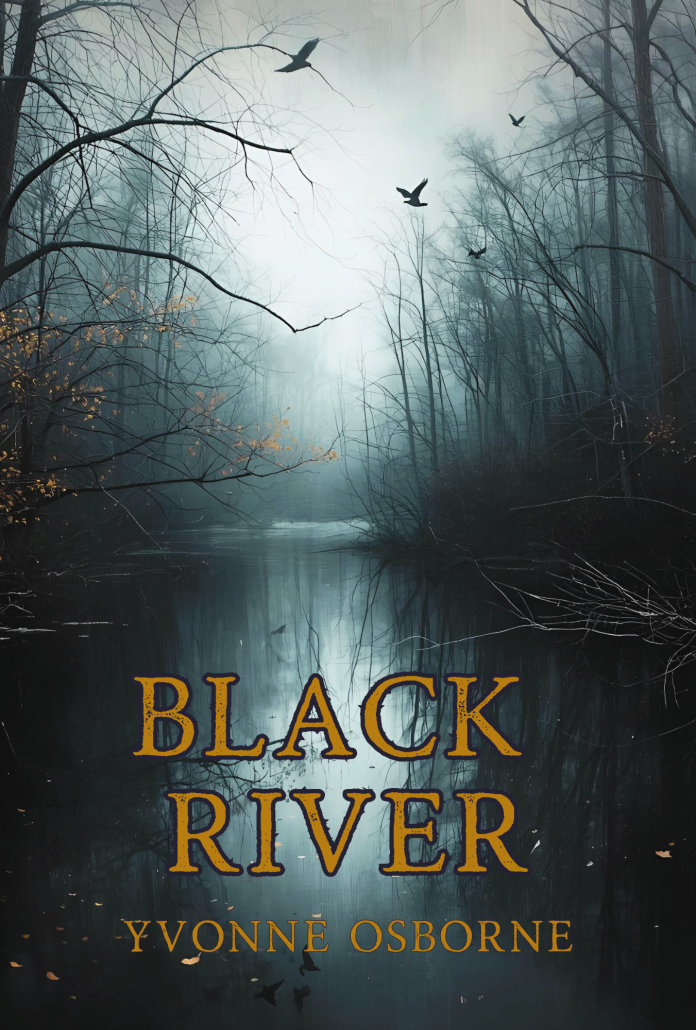
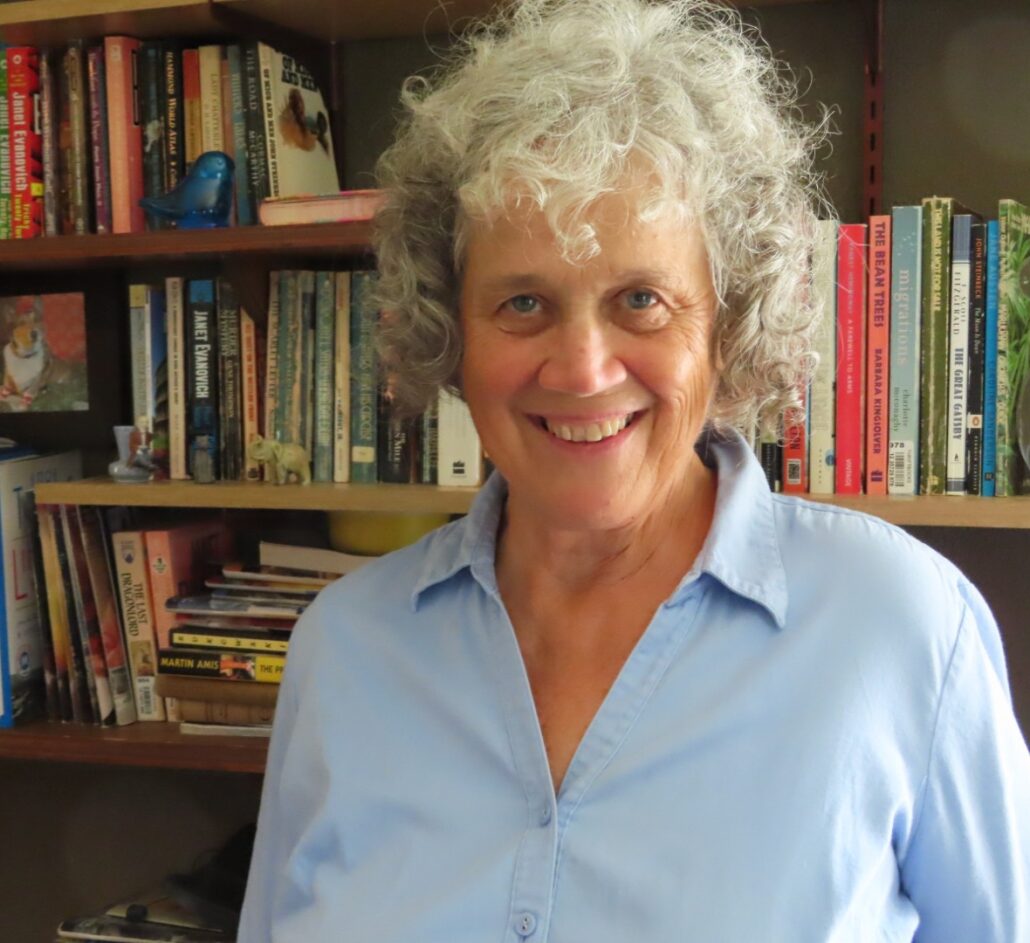 Yvonne Osborne lives with her husband on the fifth-generation family farm in the Thumb of Michigan founded by her great-great-grandfather. Under the guidance of a Shakespeare-loving grandmother, she grew up steeped in story, then attended Northwood University, where her love of writing took root. A Pushcart-nominated poet and novelist, her work has appeared in numerous literary journals, most recently in the Slippery Elm Literary Journal, Flapper Press, and Milkhouse Literary Magazine. Her debut novel, LET EVENING COME, was published by Unsolicited Press on April 2, 2024, and her sophomore novel, BLACK RIVER, a rural noir literary thriller, was published on July 28, 2026.
BOOK OF THE WEEK
The river of Yvonne Osborne’s book title flows through this compulsively readable novel and kept this reader turning its pages late into the night. The gorgeous writing is an added bonus.
–M.J. Werthman White, author of Invitation to the Party
Yvonne Osborne’s second novel, Black River is an engrossing North Country love story, as fast-paced, unpredictable, and turbulent as the wild waterway of its title. This novel refuses to be contained by any single genre, overflowing the banks of romance, suspense, action, and social commentary as the current of its narrative rushes to its irresistible conclusion.
-Dave Essinger, Editor Slippery Elm Literary Journal
Black River can be purchased at Unsolicited Press


Thanks, Yvonne. I never looked at my characters this way — but it makes sense.
Hi Kathy. I always fall head over heels, like a schoolgirl! Thanks for reading and commenting. Fall in love. LOL
Yvonne, you had me at “up a tree, throwing stones, and getting him down” and exactly what I needed to hear for my current rewrite. Thank you!!
Hi Judy! I’m so glad I gave you some ammo. The rewrite can be almost as much fun as the first draft. Good luck!
Yvonne, I write most of my series in first person, and when I write, I actually become that person for a while! That’s the joy of it all. And I hope readers get to live in the skin of my main character for a few hours, to escape from their own lives for a lovely bit. (Of course, I have to really like my main character to want to be her for the year of writing – but then, I have to like any protagonist in any book I read, to care what happens to them.) Nice column!
Hi Melodie!
I’ve never written in first person but I’d like to try sometime. I’d really have to love that character!! I agree, the joy of reading is escaping our own skins to live vicariously in someone else’s. At least for a while. Thank you for reading and commenting
Well, if we don’t love our characters, readers won’t either!
Exactly!! Thanks, Alex, for reading my little article.
Hi Yvonne & Anne — I absolutely love my characters, even the feisty ones (who often hearken back to my days teaching middle school & having a real affinity for the problematic ones). And as to the full sentence/fragment questions, full sentences are kind of like the rhinoceros. They belong in a very specific habitat of academic writing. Fragments, on the other hand, are more like sparrows — in their habitat of fiction, you find ‘em on every corner and in every tree.
Hi CS!
I bet the feisty, problematic ones are the most memorable, and from where you reap the most interestings stories. I love your sparrow metaphor. Well said! I’m finding them more and more (on every corner) and have allowed myself to wade into the fray! Thanks for commenting.
Very nice Yvonne! In an author interview I once had an occasion to say “I love all my girlfriends, even the imaginary ones.”
Matthew, I love that, of course you do. LOL Thanks!
I read your article with interest, Yvonne. And it made me stop to ponder… Is it possible to be interested in, to be curious about, and yet not to… Is it necessary to love all your characters?
Hi Leanne,
I thought I already replied to your comment but don’t see it.
Anyway….it absolutely is possible to NOT love all your characters. In fact, there were some I didn’t even like!! Thank you.
Absolutely concur. I wrote a fantasy series (currently waiting for me to execute round two of editing) and at various points in the series, I felt real pain/sadness for my characters for what I had to put them through. And felt genuine happiness for them at the end.
Oh, I so agree! We run the gamut of human emotions when writing.
Like having to kill off a beloved character to be true to the arc of the story. I still feel sadness for that guy. I genuinely loved him. Good lucs with the editing, GB, and thanks for commenting.
Good luck!! Damn typos:)