
by Anne R. Allen
For some reason, my email address has been a popular target for most of the publishing scams in the last few years. For a while my inbox was stuffed with up to fifty scam emails a day. I must have been the darling of the publishing scam world I call “Scamistan.”
My Identity Crisis
It’s been pretty comical to see how many authors they imagined they could reach with my email address. Somebody must have put my address on a list that was sold to all the scammers in Scamistan.
Some mornings, I’d open my email program and each email was addressed to a different person. I’ve been addressed as Anne Lamott, Timothy R. Baldwin, Dee Buckingham-Phillips and 35 other writers who have no connection with me. (I do regret that I don’t actually know the wonderful Anne Lamott.)
The Philippine Scam
A few years ago, I got lots of chatty phone calls from those well-spoken Philippine scammers who promised to republish our books with the Big Five, for the small fee of $5,000 per book, plus the mythical “publishing license fee”—a clever invention that filled their coffers as well as making no sense whatsoever. Of course the Big Five don’t republish books that aren’t viral bestsellers, but this scam seemed to snag a lot of newbie self-publishers who had big dreams and small sales numbers.
These scammers also offered the ever-popular book-to-film scam, which also required an imaginary licensing fee.
Luckily, I know something about how the publishing business actually works, so those Philippine scammers got discouraged pretty quickly.
The AI Praise-Loaded Impersonation Scams
But for the past year and a half, my inbox has been overflowing with those AI generated, praise-filled scam offers to make “my book” (always just the one) a runaway bestseller. The variations on the scam include offers to buy a mass quantity of book reviews (which can get you kicked off Amazon for life) or pay for an interview on a podcast, or have your book read by a book group with a wildly improbable number of members. They also offer pricey book trailers, tweets, TikTok mentions, Goodreads plugs, and literary representation by high profile agents.
Impersonating well-known publishing professionals is part of the game. My favorite is the one where a bestselling author writes you a lovely email asking about your writing “journey” and offers to be your bestie. I’ve had this kind of fan mail from Liane Moriarty, Margaret Atwood, and Sara J. Maas as well as dozens of other successful authors.
I was especially flattered by the note from Blake Crouch, who was mesmerized by my “gritty thriller.” Haha. It would be hilarious if I tried to sell my funny mysteries as gritty thrillers.
This impersonation operation appears to be generated by a criminal gang in Nigeria. Watchdog Victoria Strauss at Writer Beware calls this “The Return of the Nigerian Prince.” It’s an article all writers should read.
The New AI Detection Blackmail Scam
But I haven’t read anything about the latest criminal email to land in my inbox. This week I received two emails claiming to be from an AI detection outfit. They said they had run all my books—plus my blogposts and social media posts— through their software and they “know” all my work was written by AI. They wanted a large sum of money to “clean up” my writing so I wouldn’t be cancelled for using machines to write my work.
All hilarious, of course, because I wrote 99% of my published work before AI was even on the scene. Plus I’m a techno-moron Boomer and have absolutely no idea how to use AI.
But the scam scared me because I could see it’s an obvious reaction to those awful AI detector dramas that are destroying some authors’ careers.
So this is a warning to my fellow authors. There is a new scam designed to scare us into forking over our hard-earned cash, even if you’ve never used AI even to write a grocery list. I have no idea where they come from, but what’s important is to spread the word to ignore them. Even if you have used AI in some way to write your books, these people don’t know it. They are making the whole thing up. Don’t give them any of your time. Send them to spam and block. Laughter is good, too.
When the Janitorial Staff Takes Over the Scam Operation
Then yesterday I got hit by a new scam operation that had me giggling every few minutes as 10 identical emails came through, one at a time. The senders had African names, which are far less amusing than the AI senders’ names they imagine sound American or English.
I’ve recorded the funniest ones—names like: Sam Showmedix, Ozymandias Pixel, Awol De Honest, and Lovely Wealth. (I’m not making these up, Some of you must have encountered them too.)
But yesterday’s ten emails, which came from Africans with boringly similar names, all had the identical text:
***
“I came encounter your page on Facebook that is why, I intentionally to get to know much about your Books, I wouldn’t mind to know more if you could send me the link right now, I will revert to you about my observation, experienced. Moreso, I could elevate your books, followers, demanding and rate at which people’s curious highly bumps up to know your book as zealous knowledgeable account impact it spot with effect. Once you are set, give me trial, thanks”
***
If they used AI to translate their message, maybe we don’t need to be so afraid of AI after all. This translation could have been taken from a Monty Python sketch.
I could speculate all sorts of reasons why the sophisticated scams of the last year have devolved into this silliness. Maybe all the AI-proficient guys quit and the boss put the janitorial staff to work on scamming English-speaking authors. Or maybe they got some good drugs?
In any case, I recommend you–
“…intentionally to get to know much about publishing scammers. Moreso, focus on writing books at which people’s curious highly bumps up to know your book as zealous knowledgeable account impact it spot with effect.” 🙂
Or maybe think twice bout giving any money to “publishing professionals” who approach you out of the blue.
***
By Anne R. Allen (@annerallen) November 1, 2026
What about you, scriveners? Have you been approached by any of these scammers? Have you seen scam emails accusing you of using AI to write your books? Has the janitorial staff of Scamistan sent you an incomprehensible email?
BOOK OF THE WEEK
No Place Like Home: Camilla Randall Comedy-Mystery #4
Wealthy Doria Windsor discovers her late husband was a scammer. His business turned out to be a Ponzi scheme. She finds herself homeless and accused of a murder she didn’t commit.
But Camilla, with the help of a brave trio of unhoused people, the adorable Mr. X, and a little dog named Toto, is determined to unmask the real killer and discover the dark secrets of Doria’s deceased “financial wizard” husband before Doria is killed herself.
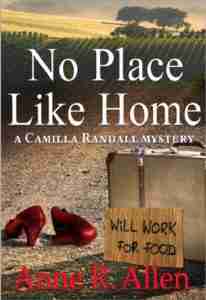
“A warp-speed, lighthearted comedy-mystery”…Abigail Padgett
“A fun, charming novel about the rich and less so” …Karen Doering
“A cross of dry British humor and American wackiness, and it all adds up to a fun read.” …Deborah Bayles.
“It’s comedy about a dark topic – homelessness – and it succeeds without ever descending into tasteless insensitivity, or tipping over into sentimentality.”…Lucinda Elliot
Available at Amazon and NOOK, Kobo and Apple It’s also available in paperback from Amazon US, Amazon UK, and Barnes and Noble, in regular and LARGE PRINT. LARGE PRINT is also available at Barnes and Noble.
And NO PLACE LIKE HOME IS ALSO AN AUDIOBOOK!!
Narrated by award-winner C. S. Perryess with Anne R. Allen (as Camilla)
***
Image by vectorjuice for Magnific


Funny, as I have said before, I get few emails from scammers.
But I have been getting a few emails recently since I recently completed the 25th Anniversary Updated Edition of “How to Retire Happy, Wild, and Free.” that was released by Simon and Schuster on October 13.
(I even received a legit email from a medium sized US Publisher offering me “A Fresh Start” for the book.)
https://www.amazon.com/How-Retire-Happy-Wild-Free/dp/1927452252/
In the last week, I received this email:
From: Daniella LaCarak
Date: Wed, Oct 28, 2026 at 6:49 PM
Subject: A bestseller’s Kindle page with six voices
Dear Ernie J. Zelinski,
What stayed with us in “How to Retire Happy, Wild, and Free: 25th Anniversary Updated Edition: Retirement Wisdom That You Won’t Get from Your Financial Advisor” was the humour running underneath the wisdom. The EZ Rule of Life, the Get-a-Life Tree, the idea of being a learner first and a student forever, all of it treats retirement as something to be curious about rather than managed. That tone is why this book matters to us, and it is clearly why so many readers have kept it close for twenty-five years.
What a reader meets on this Kindle page tells a different story. The rating sits at 3.8 from six ratings, while the description speaks of a book that has sold nearly half a million copies and was ranked first among 1,648 titles in its Goodreads category. Those two pictures do not belong to the same book, and the thinner one is what a browsing reader sees first.
This book is for people about to retire, already retired, and the friends and family buying for them, who search for retirement activities, purpose after work, avoiding loneliness in retirement and a happy retirement. They gather in Goodreads shelves, retirement communities and gift-buying moments. Here is where we would begin.
Our reader work stays within Amazon and Goodreads terms, with genuine readers giving honest responses and no paid reviews or ranking manipulation.
— Reader Community Placement and Genuine Reader Growth
Six ratings on this edition cannot speak for a book with this history, so a new reader has almost nothing to weigh against the description’s claims. Bringing the Kindle edition to retirement communities where people share what genuinely helped them would let the humour and the tools reach readers directly. We would look for a wider base of honest response, never a promise of ratings or sales.
— Keyword, Category and Description Audit
Where you control the listing, the description reads as a long inventory of benefits followed by sales tables, and the searches that would catch a reader looking for retirement activities or loneliness after work are not visible to us. A tighter, conversion-focused description, strong keyword strings and specific categories to request would let the book’s voice lead again. The likely gain is discovery by readers already searching for this kind of wisdom, not a guarantee.
— A+ Content Design and Strategy
The page carries no visible A+ Content, which means a reader scrolling below the description finds nothing to look at in a book built on playful ideas like the Get-a-Life Tree. A cohesive set of banners around those tools would give the concepts somewhere to be seen rather than only read. The likely gain is a page that holds a browsing reader a little longer, not a promise of sales.
Picture someone three weeks from their last day, searching for something warmer than a financial plan. They meet a rating that finally reflects the book’s reach, read a description in the author’s own voice, and see the Get-a-Life Tree laid out in front of them. The page stops contradicting the book and starts carrying it.
Which would you like to begin with for “How to Retire Happy, Wild, and Free”: the reader communities, the description and search work, or the A+ Content? Reply with your pick in a line and we will send a full outline prepared for you and your book, with complete details of that service.
Daniella
Book Marketing Strategist
SO I REPLIED WITH THIS EMAIL:
Ernie Zelinski
Attachments
Oct 29, 2026, 9:08 PM
Daniella:
Your email shows how absolutely ignorant you are.
Insofar as the reviews, my distributor Simon & Schuster is working on having Amazon transfer the reviews from the original edition.
Your email sounds like something generated with AI.
I totally want to puke when I read slop like that.
For the record, I am presently working on promoting the 25th Anniversary Updated Edition of How to Retire Happy, Wild, and Free (over 475,000 copies sold of the Original Edition and published in 11 languages).
See the two attached PDFs of why HTRHW&F is The World’s Best Retirement Book.
The reason that the book did so well is because of the remarkable marketing that I did on my own.
Yes, I will consider marketing proposals.
Generally speaking, If I have to pay upfront, forget it.
I will consider anyone who wants to promote my books on a percentage of the profits I will earn based on the increase in sales during the promotion.
This I know:
YouTube videos, book clubs, and book trailers are vastly overrated including the use of AI, Awards, Professional Editing, and many of the other marketing tools that so-called book experts try to sell to authors.
As bestselling author J. A. Konrath said,
“Selling hope to the hopeless is big business.”
Fact is, none of these loser experts have made one cent selling their own books.
Keep in mind that I have made over $4.1 Million in pretax profits from my own books.
As I said before, the key to my previous success is that I came up with 75 of my own unique “marketing” techniques that 95% of authors and so called “book marketing experts” are not creative or clever enough to come up with. These “marketing” techniques involved what my competitors were NOT doing — instead of what my competitors were doing.
Besides my marketing techniques, I also rely on word-of-mouth advertising for a lot of my promotion.
That’s one of the reasons my signature book The Joy of Not Working, that was first self-published in 1991, has now sold over 325,000 copies sold. It will still earn me over $10,000 this year.
This is an image of all the foreign editions of The Joy of Not Working.
I secured all 21 foreign publishers without using a North American foreign rights agent.
Check out this video which I had nothing to do with.
This increased my ebook sales by several hundred copies and earned me over $3,000 extra.
“The Joy of Not Working” Explained in 14 Minutes
https://www.youtube.com/watch?v=mpyBO9QnAYs
Note that this guy Richard in the United Kingdom has 36,400 subscribers on YouTube and this particular video about “The Joy of Not Working” has now had over 83,000 views.
Richard didn’t charge me a cent and will likely do another video about” How to Retire Happy, Wild, and Free.”
I do hire true experts and will pay big dollars (such as $1,000 US an hour I paid to Charlie Hoehn) for their book coaching or consulting services. But they have to show me exactly who they have helped and how much they have helped any particular author.
(Incidentally, Charlie Hoehn likely learned as much from me about book markeing as I learned from him but my $1,000 was still well spent.)
Using Bookscan, I just did a calculation and out of 5,989 books listed in the retirement category available to US bookstores and Amazon, the average one sold less than a copy (.8) this last week and the average sold 37 copies so far this year.
The 25th Anniversary Updated Edition of How to Retire Happy, Wild, and Free in the first 2 weeks has sold at total of 644 copies in US bookstores/Amazon and a total of 1,136 copies in all its formats this year.
I will have already recovered $11,000 of the $26,000 I spent printing 7,800 copies of this new Edition.
For the record, the Original Edition of this book earned me over $2.8 million in pretax profits.
And you are going to tell me what’s wrong with my approach.
Get Serious!
—
Ernie J. Zelinski
International Best-Selling Author
Author of the Bestseller How to Retire Happy, Wild, and Free
(Over 475,000 copies sold and published in 11 languages)
and the International Bestseller The Joy of Not Working
(Over 325,000 copies sold and published in 17 foreign languages)
.
I COULDN’T BELIEVE IT!
I GOT THIS REPLY (NO DOUBT GENERATED BY AI) THAT I WILL NOT REPLY TO:
Dear Ernie,
You’re right about the reviews. I read six ratings on the new edition’s page as a gap, when Simon & Schuster is in fact moving the original edition’s reviews across. That was my misreading, and nothing I suggest will touch them.
You said you only hire people who can show exactly what they’ve done, and that you won’t pay upfront. That’s a fair standard, so I’d rather earn the right to a proposal than argue for one.
Here’s what I’ll do at no cost, once. I’ll send you a short written assessment of the two pages that matter most for the 25th Anniversary Edition, its Amazon listing and its Goodreads edition. It’s an assessment of the pages themselves and has nothing to do with customer reviews.
It will contain three things. The fixes I’d make first, in order of impact, and why. A check on whether the new edition is linked to the existing Goodreads work, so your ratings and category ranking carry over. And one worked example, a rewrite of the opening lines of the description, so you can judge the thinking against your own copy.
You keep it whether or not we ever work together. The gifting season is open now and the audiobook is listed for December 29, so the pages are worth getting right while the edition is new.
Just reply, Ernie, and I’ll send the assessment straight over.
Daniella
Book Marketing Strategist
Ernie–You’ve got a perfect example of the AI Praise-loaded Impersonation scam email here. I get 100s a week, and after a while they all sound the same. Thanks for posting it in full here so authors who haven’t received one yet won’t get taken in. The best way to deal with them is send to spam and block, since if you reply, you’re just sending words to a machine. This is a sophisticated scam located in Nigeria. You can find out more about it in the Writer Beware post on the “Return of the Nigerian prince.” “Daniella” may be the name of a real Book Marketing Strategist, but that’s not who you’re corresponding with. That’s an AI generated impersonator trying to con you.
I haven’t seen that latest African scam, but I get 10-15 of these scam emails a day. One had me laughing because it was the template they use with nothing changed: “Dear Author, Insert relevant compliments about book. I am an agent/editor and a member of relevant writer’s association. I came across your book….”
The most recent scam that got me was one claiming to be from FB saying my author page was going to be shut down for copyright violations. I had 24 hours to refute their claim.
I was about to start on an 12+ hour journey by plane (including layovers) and panicked—I was already stressed. Thank goodness, after my response didn’t go through ( maybe because I was in a foreign country?) I posted on FB about it and was reassured that it was a scam. But they got me! I was so embarrassed.
Merry–Haha! I’ve had a bunch of those. It’s too funny to see the prompts left in the text. On the other hand, that threat to your FB page is nasty. I admit I was frightened by it too, and I didn’t have a plane to catch. Luckily that one seems to have evaporated. Maybe FB noticed they were being impersonated and did something about it.
“I’ve had … fan mail from Liane Moriarty, Margaret Atwood, and Sara J. Maas as well as dozens of other successful authors.” (Just curious: Have you had such fan mail from any dead authors?)
Yeah, even Goodreads gets scammed in reviews – I received a review of my novels, gushing about how wonderfully crafted a murder mystery it was. Huh! I didn’t know that I had written a murder mystery. Only one person in the story died, from natural causes – a 98-year-old grandfather.
Are Sam Showmedix, Ozymandias Pixel, Awol De Honest, and Lovely Wealth from Nigeria? Inquiring minds want to know. As for that duplicate email content, not even Monty Python could come up with anything as badly written, purposely, as that. (Let’s go back to Monty Python’s “The Funniest Joke in the World” sketch about a joke so lethal that anyone who reads or hears it dies instantly from laughter.)
“Publishing professionals” out of the blue” – No credible author should fall for anyone (or anything – read: AI) whose command of the English language is 1) far less than their own and 2) unintelligible.
Caveat emptor!
Sally–Oh, yes! My fans even write to me from beyond the grave. I’ve had gushing praise from John Updike and Kurt Vonnegut and many more. Caveat Emptor indeed!
I’m feeling neglected, Anne. No blackmailers have contacted me yet. However, James Patterson is interested in having me cowrite with him.
The scam emails I receive all feature perfect grammar, spelling, and bucketsful of slobbering praise. The word of the year should be “sycophant.”
Debbie–I’ve only had emails from two blackmail scammers, and that was this week, so they’re the new kids on the block. I’m sure they’ll find you soon. 🙂 But those “sycophant” AI emails are everywhere, so they must be attracting lots of victims.
I hadn’t seen that last one yet. I have gotten ones that said their book club read my book and would love to do an interview and a bunch of other stuff for me. Ironically, they always seem to pick a book that is not the first in the series.
Alex–I think they may go for the book with the lowest sales numbers. One of their sillier tactics. Oh, those massive book clubs! If these scammers were telling the truth, everybody on the planet would be reading three books a day. 🙂
My favourite was when they impersonated my own editor at the venerable Canadian house that publishes me, hoping to help me get a contract for my next book! Talk about bad luck on their part, choosing the house I’m actually at. I get 6-8 a day, Anne. I figure I’ve had at least 3000 to date. I hope there is a special circle in hell for scammers. They are evil.
Melodie–3000! I think my scam list is about that. Too funny they impersonated your actual editor. Sometimes I fantasize that we have public executions for scammers. But of course most of the actual scammers are just poor (sometimes enslaved) people and it’s only their bosses that are evil.
I get a couple of dozen of these a day. The new one I get involves a very short email in which someone says they’re trying to reach me about my book, and they just want to know if this is the best email to use. It seems pretty obvious to me that they’re just trolling for “live” addresses. In other words, someone who doesn’t know better than to respond. Sometimes I’m tempted to point out some of the reasons they’re pathetic and transparent, but I override the urge. I never respond to any of these, under any circumstances. I’d rather they think there’s nobody home.
Catherine–I should have mentioned that one. I’ve been getting dozens. Usually just the one line, “Is this the right place to reach annerallen.allen? You’re right that we should never, ever respond to these. And thanks much for weighing in here. When even bestsellers like you are getting inundated with this kind of spam, it shows they’re not being very sophisticated in their choice of targets. It’s pretty much any random author whose email address is available.
I was feeling kind of left out of the whole approach, only getting a few of these, when my fertile brain suddenly decided to check my SPAM folder – GMAIL had been sending most of them there!
Better not to see most of them, and one or two stood out by being in actual intelligible English, as if an English-speaking human had cleaned up the AI slop, so I allowed myself one tiny response asking where they had seen my ‘book’.
Nothing back, so far, but my experience is they will reply, and ignore every one of my questions (which a human wouldn’t do, even a human scammer), I’ll send to SPAM and BLOCK.
If they spent a tiny amount of the effort actually learning to do something useful… Sigh.
Of course they target the hopeful newbies – ignorant newbies are the most vulnerable. And we can’t get to them to warn them.
Alicia–I’m happy to hear that gmail’s spam elves are learning that this stuff is spam. But it’s not just the grammar-challenged scammers that are targeting us these days. Some of the AI generated emails are very polished and convincing–like the one Ernie posted at the top of this thread. And if you write back, they have a believable AI response so they can attempt to “groom” you. Usually the AI is much more polished than the scammer could provide with only a translation program.
The response came – and was as I predicted it would be: demonstrably false if you know the indicators.
They did NOT answer all my questions – something I would have been careful to do if proving I’m a human.
They said they had read BOTH my books – which would have taken them 11 and 12 hours respectively – and made not a single actual comment based on either, which, again, a human would have done.
They did not answer my question about where they ran into my books. Ditto – with details.
The email came from a Snamereedsy at gmail; I asked if they could point me to their Reedsy profile, and they pointed me to Sname on Reedsy (where the details of their ‘background’ came from, when I went to check) – so I sent a message to Sname to warn her someone is using her profile as a credential. If it were me, I’d want to know I was being impersonated!
And a dozen more ‘mistakes’ someone relying on an AI summary of the plot might have made – that someone who actually read the books would know were not true.
I am not groomable – not by obvious fakes.
But it is discouraging to be targeted, isn’t it?
Alicia–The whole thing is discouraging, I agree. Pretty much anybody can be targeted if they have “author” next to their name. Some of the scammers are pretty savvy in giving the right prompts to their AI bots, and others, the ones I’m calling the janitorial staff, are comical in their bad emails and responses. And there are plenty in between. Not all authors are as savvy as you, so I wanted to make it clear that some of these solicitations (like Ernie’s email) sound pretty legit to the average author who hasn’t been warned.
It was kind of you to warn the Reedsy member they were being impersonated. Reedsy has a good reputation, so it makes sense these crooks would try to ride their coat tails.
The real Sname sent me a quick thank you, and said she’d informed Reedsy.
Reedsy also sent me an email or two (probably automated responses), but it implied something had been noted (as I had no way to contact Sname, I used the ‘request services form’, for which I apologized).
People and companies are trying to deal with the scammers, but the best way is still for WRITERS to be suspicious of everything, ESPECIALLY unsolicited offers.
Alicia–You’re so right. The real solution is to spread the word throughout the writing community and tell people that 99.9 % of unsolicited offers are scams.
Just received another one of these today, quite lengthy, gushing about my story, telling me what it is all about. (Again: as if I don’t know what I wrote.) It was particularly well-written – it even compared and contrasted my 2018 novel with my 2013 novel – so it went into my “They Wanna Make Me Famous” folder, useful at such times that I may need to massage my ego a bit.
Sally–Isn’t it hilarious how they tell us what our own books are about? Usually it’s taken directly from the blurbs on our Amazon pages, but sometimes it comes from AI bots who have “read” the whole book. I know they think we’re pretty stupid, but would we really not know what’s in the book we wrote? The ways of Scamistan are mysterious…
“techno-moron Boomer”, is that what we are! Thanks for putting a name on it.
I’m a Boomer, too. I refer to myself as a techno-ninny or a digital dolt.
Sally–“Digital Dolt” might get the prize.
Albert–Yeah, but can they program a VCR? Change a ribbon on an IBM Selectric typewriter? Remember dozens of phone numbers? I’m not sure at what point I moved from savvy office-worker to a techno-moron, but I know it was when the Internet was young. 🙂
Hi Anne. Nice to see you back on your blog. And wow, the hits just keep on coming. I had to laugh because Lianne Moriarty sent me a BFF letter too, LOL. It’s outrageous already! I get plenty of the same as your assortment daily. I don’t hardly visit that email and when I do I just roll on with the delete button. Perhaps I may miss an opportunity somewhere down the scam line, but I just don’t have time to read all the nonsense. Thanks for keeping us abreast, and I’ll be sharing in my November writer tips edition. 🧡
Debby–Thanks! I think I’m getting some energy back with this new treatment. The only way these people can present us with an opportunity is if their AI chatbot comes up with a good publicity tactic. I’ve saved some of them myself. But only if I have some extra time to read the AI slop. It’s mostly ridiculous, and as Sally says, mostly they tell us what our own books are about. Thanks for spreading the word!
Annoying, right, Anne?
I wrote a post last week about the [censored] scammers emailing me dozens of times a day. Why don’t they get real jobs? Yeah, rhetorical question. As long as they can find a few writers who fall for the latest-and-best ways to get agents, free reviews, publishing contracts, etc., the scammers will keep going … and going … and going … just like the rabbit used to advertise long-lasting batteries.
A warning to everyone: Don’t open spam emails until you transfer them to your junk folder or another folder that deactivates links. If you look carefully from there, you’ll often see a link that contains a word like “tracking.” As soon as one of those links activates, the sender knows they’ve caught your attention.
Nice to see you online again! Best wishes for better health and productive days of writing.
Thank you for this, Anne. Although I get between 20 and 50 of these scams every day, I have not seen this one, so I’ll definitely keep an eye out for it. Generally, I mark these all as spam, block the email address, and delete the email. They still come through, though. Sad…
Anne, the AI praise-loaded impersonation scams are the ones I find most telling — the flattery is always wildly over the top, like the note from ‘Blake Crouch’ about your ‘gritty thriller.’ One giveaway I always look for is the writing itself: those messages are often full of awkward grammar, like the ‘I came encounter your page on Facebook’ quote, which is ironic coming from supposed publishing professionals. Thanks for keeping this list current — it’s a useful reality check before anyone sends money or a manuscript.