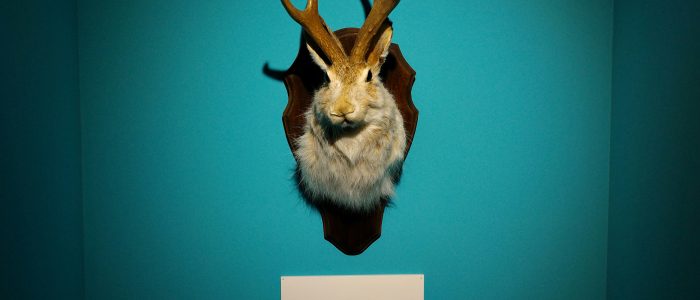
Don’t let dangerous critiques turn your novel into a Jackalope
by Anne R. Allen
This week’s post is an updated version of a post from 2022. I’ve recently seen a number of new writers complain about how difficult it is to please all their beta readers, especially when the readers disagree. So I thought it was time to remind writers to ignore the advice I call dangerous critiques.
One of the most damaging things a new writer can do is try to please everybody who beta-reads or critiques their WIP. That can result in a Frankennovel or a Jackalope—an assembly of unrelated parts that will be unreadable.
If you tend to be a “people pleaser” this can be a real problem.
I’ve been swayed by dangerous critiques a few times myself. One of my Camilla romcom mysteries has suffered the wrath of reviewers because there’s too much realism going on with one character’s tummy tuck. A critiquer told me with great authority what a complicated procedure a tummy tuck is. So in spite of my tummy-tucked friends who had no such complications, I let his confidence sway me. I added way too much clinical detail to my breezy romcom.
I learned some things.
- Never let one person’s opinion change your WIP.
- Never make revisions based on advice from someone who doesn’t know your genre.
- Beware the Dunning Kruger effect. (That’s where the most confident people are often the most ignorant on the subject.)
I’m not saying you shouldn’t welcome beta readers and critiques. Joining a critique group is one of the best things a beginning writer can do. But new writers also have to learn how to weed out the un-useful advice.
I wrote about this in my post on Critique Groups: 6 ways they can help your writing and 6 ways the can’t.
Sources of the Most Dangerous Critiques
1) The Realism Brigade
These are the folks who want to know when your characters go to the bathroom, and point out that it really isn’t all that realistic to have your first kiss in front of everybody at work, the window of a department store, or the middle of a snowstorm.
They’ll tell you that gun has too much of a kick for a young woman to handle and that nobody could run that fast in high heels.
They must be so miserable in superhero movies.
The truth is that most fiction is not realistic and is not meant to be.
James Patterson said it well “ I don’t do realism. Sometimes people will mention that something I’ve written doesn’t seem realistic and I always picture them looking at a Chagall and thinking the same thing. You can say, “I don’t like what you do, or I don’t like Chagall, or I don’t like Picasso” but saying that these things are not realistic is irrelevant.”
2) The Detailers
These are the folks who want you to tell us the species of trees that your heroine is running through to escape the giant sabertoothed cave rats. They’ll add, “And bring in all the senses here. What do the trees smell like? What does the pathway feel like under her feet? Are there birds in the forest? Describe their songs.”
By this time the heroine has been eaten by the giant sabertoothed cave rats and your reader is bored to tears.
Details in fiction should be like Chekhov’s Gun. Don’t spend two pages describing trees if those trees don’t end up being an important part of the plot.
3) Grammar Enforcers
These people may write nonfiction, or teach technical or business writing. Every one of their suggestions is correct, and they can tear through your WIP and make it read like a grammar text book.
Fiction requires sentence fragments, one-word paragraphs, and unfinished clauses. Sometimes you even need to use a preposition to end a sentence with.
If you let the Grammar Enforcers get hold of your WIP, the result will send your readers to sleep.
Grammar AI programs and autocorrect can give you even worse advice. Autocorrect just tried to put a comma after “Grammar Enforcers” in the last paragraph. ☹
4) Autobiography Sleuths
Have you ever had a reader assume a first-person narrator is the author? They seem to think every novel is an autobiography, so they try to ferret out the bits that give a revelation about you.
I once went to a workshop where several participants referred to my protagonist as “you.” One told me that my character should not wear orange, because it would look terrible with my coloring.
And at one critique group, a member walked out because my ditzy fashionista heroine made a snarky remark about people who wear Crocs. (I happened to own several pairs of Crocs, but this didn’t matter. That character was ME, as far as she was concerned, and she was permanently offended.)
I heard from a writer of YA fantasy — a tall man – who had a workshopper tell him his story would never work because he was too tall to hide in a wizard’s cupboard. Yup. Because the author is a 12-year-old elf.
The Autobiography Sleuths will try to make that elf into you if you let them. If somebody doesn’t “get” your genre or style, ignore their advice.
5) Medieval Political Correctness
“There are more appropriate ways to establish boundaries,” one critiquer said of a writer’s lady-in-waiting character in her Tudor-era historical novel. The character had just pulled a knife on a particularly handsy duke. The advice was, “She should assert her rights and report his sexual harassment to the queen. Relationship problems should never be solved with violence.”
These are some of the most dangerous critiques, because the suggestions may resonate with your modern sensibilities.
But don’t listen. Women in the Middle Ages (or a Fantasy version of them) did not have Feminist sensibilities. Neither did the men. Yes, their attitudes may be offensive to some people who live in very protected academic bubbles. But you need to ignore those people. They are not your audience. Fans of historical novels usually know something about history.
Historical fiction doesn’t always have to be accurate down to the last rivet in a suit of armor, but the author does not want to let anybody put modern thoughts in a 500-year-old head.
6) The Soul-Crushers
These might perpetrate the most dangerous critiques of all. It isn’t always what they say, but the tone of voice and harsh delivery. They’ll start a critique with an exaggerated sigh, perhaps accompanied by a pitying half-smile.
They’ll tell you that your premise is ridiculous and you can never write a whole novel about an elf who has accidentally made himself invisible. Or they will deem your voice “puerile” and suggest you give up novels and learn to write haiku.
They also may deliver ad hominem criticism, calling the writer arrogant and ignorant, since he has no qualifications for writing on the subject of elves. They may tell everyone, at great length, how personally, they are much more more qualified than the hapless writer, After all, they once worked as a department store elf at Christmas.
After you leave the workshop in tears, you must erase every word this person said from your memory. They have an agenda that has nothing to do with you or your work.
7) Genre Inappropriate Dogmatism
These people have a set of rules in their heads they think apply to all genres.
Your quiet literary domestic novel can be ruined by thriller writers who tell you a novel must have, “more action! Get those people to move. They’re just sitting around talking! Nobody’s going to read that.”
The reverse is true when people trained in literary workshops want to know the psychological motivations of every member of the gang who are trying to whack our hero. And of course they want the hero to be more introspective. “What’s his backstory? Does he have parents? Siblings? Why doesn’t he think about them when he’s chasing the bad guys in the stolen police cruiser?
We all have to remember that specific genres have specific rules that don’t apply to other genres. Don’t let some mystery writer get you to throw a dead body or two into your sweet Romance.
8) The Writing Rules Police
I’ve devoted whole blogposts to these dangerous critiques. They can ruin any book with their strict adherence to a murky set of rules that may or may not have anything to do with good writing.
I’ve heard from so many writers who have destroyed a WIP by eliminating every example of the word “was” or purged it of every adverb or adjective.
Don’t let anybody ruin your book with silly rules. Some rules make sense to a point, and others are only helpful in certain situations and to solve particular problems.
But anybody who tries to follow all of the rules all of the time is going to end up with a mess.
9) The Morality Judges
Someone in a workshop will often complain that a character’s motivations are less than altruistic, so they find them “unlikeable.” Or they’ll tell you the character’s actions are wrong according to scripture and your book comes across as “Satanic.’
They are shocked and dismayed that your protagonist is planning to murder her abusive husband, when she should go to her pastor for counselling. After all, she made a vow to stay with him in sickness and in health.
These people provide a whole lot of “shoulds” in their advice. The main one is that all fictional characters must be perfect, upright citizens from page one. There should be no room for growth or a character arc.
You can imagine how boring their own conflict-free stories must be. The only “should” here is you should ignore all their advice.
10) The Recappers
“Who are these people? Why are they dressed like pirates? Are they in a broom closet? Tell us where we are we supposed to be.”
If you belong to a critique group that meets weekly or monthly, most members will remember very little of your story from one session to the next. So they will demand a recap of the plot and characters at the beginning of every chapter.
I followed their advice with a novel I sent to my publisher. The editor was furious with me for inserting all this redundant material. “We know what happened! This is all in the previous chapter.”
Give a nice oral recap of the story to your critters, but don’t put it in your novel. You’ll drive your readers batty. And your editor will call your book a jackalope. Or worse.
By Anne R. Allen (@annerallen) June 14, 2026
What about you, scriveners? Have you ever received one of these dangerous critiques? What’s the most unhelpful kind of critique you’ve ever received? Can you add to this list?
BOOK OF THE WEEK
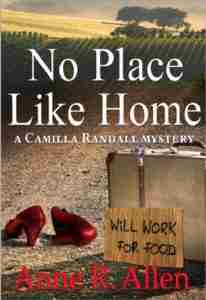
No Place Like Home: Camilla Randall Comedy-Mystery #4
Wealthy Doria Windsor discovers her late husband’s business was a Ponzi scheme. She finds herself homeless and accused of a murder she didn’t commit.
But Camilla, with the help of a brave trio of unhoused people, the adorable Mr. X, and a little dog named Toto, is determined to unmask the real killer and discover the dark secrets of Doria’s deceased “financial wizard” husband before Doria is killed herself.
“A warp-speed, lighthearted comedy-mystery”…Abigail Padgett
“A fun, charming novel about the rich and less so” …Karen Doering
“A cross of dry British humor and American wackiness, and it all adds up to a fun read.” …Deborah Bayles.
“It’s comedy about a dark topic – homelessness – and it succeeds without ever descending into tasteless insensitivity, or tipping over into sentimentality.”…Lucinda Elliot
Available at Amazon and NOOK, Kobo and Apple It’s also available in paperback from Amazon US, Amazon UK, and Barnes and Noble, in regular and LARGE PRINT. LARGE PRINT is also available at Barnes and Noble.
And NO PLACE LIKE HOME IS ALSO AN AUDIOBOOK!!
Narrated by award-winner C. S. Perryess with Anne R. Allen (as Camilla)
***
Featured Image by ün LIU on Unsplash


Loved this: Fiction requires sentence fragments, one-word paragraphs, and unfinished clauses. Sometimes you even need to use a preposition to end a sentence with.
Not sure I’ll ever write/ finish that novel… but enjoy your blog..
Londie–I had fun writing that. Sometimes writing brings us joy and sometimes the opposite. But as long as there is some joy, I think it’s worth sticking to it. But sometimes you do have to shelve a project. Maybe that novel isn’t the right one for you now.
As a successful writer who has received a great deal of criticism from the babbling bozos, pathological critics, and habitual haters of this world, I offer these words of wisdom about critics:
“Any fool can criticize, condemn and complain … and most fools do.”
— Dale Carnegie
“The bigger the fool and failure in life, the bigger the critic of successful and accomplished individuals.”
— Benjamin A. Sloan
“You’ll never be criticized by someone who is doing more than you.
You’ll always be criticized by someone doing less.
Remember that.”
— Denzel Washington
“Great spirits have always encountered violent opposition from mediocre minds.”
— Albert Einstein
“Whoever is trying to bring you down, is already below you.”
— Unknown wise person
“Keep away from people who try to belittle your ambition. Small
people always do that, but the really great make you feel that you, too, can become great.”
— Mark Twain
“My courage always rises at every attempt to intimidate me.”
— Jane Austen
“A tiger doesn’t lose sleep over the opinion of sheep.”
— Unknown wise person
When a true genius appears in the world, you will know him by this sign, that all the dunces are in confederacy against him.
— Jonathan Swift
“It is better to be hated for what you are than to be loved for what you not.”
— André Gide, French Author and Nobel Prize winner
“Being able to totally ignore your critics is the ultimate self-care.”
— EJZ (Author, Self-Publisher, & Self-Quoter)
Also, I like that you bring up the Dunning-Kruger phenomenon.
In this regard, I wish I could be half as certain of anything — as a lot of these pathological critics and habitual haters are of everything.
These words of wisdom apply:
Only the fools are certain and assured.
— Michel de Montaigne
“The first principle is that you must not fool yourself — and you are the easiest person to fool.”
— Richard Feyman
“It’s easier to fool people then convince them that they have been fooled.”
— Mark Twain
The trouble with the world is that the stupid are cocksure and the intelligent full of doubt.
— Bertrand Russell
If you are sure you understand everything that is going on, you are hopelessly confused.
— Walter Mondale
“Darwin will sort out the delusional, pig-headed, and willfully ignorant.”
— Mark Coker
Ernie–These are priceless! Thanks. I especially like the Mondale quote.
All very helpful and encouraging. You have our backs! A politically correct person in my group critiqued my WIP as I’d presumed to write about people not of my race or social class. It would be hard to write fiction drawn from my years in Pakistan without a diverse range of Pakistani characters. Thank you again.
Julia–Oh, that “cultural appropriation” stuff can get really out of hand, can’t it? The idea that you can’t write about anybody who isn’t exactly like you is a recipe for bad fiction.
Great advice, Anne. I had a critique in an online critique group who said that because I hadn’t used any of her suggestions, she wasn’t going to critique any more of my work!
Needless to say, it didn’t worry me!
Congrats for dodging her future spitballs.
Vivienne–I’m so glad to see the WP elves let you comment today! There is a lot of ego involved with critiquing, isn’t there? People who want to rewrite your work as if it were their own are the least helpful. Usually you have to ignore their advice anyway, so bu-bye! 🙂
Great post, Anne!
Kathy–Thanks a bunch!
Wonderful post! I’d like to suggest the existence of a different variety of soul-crusher–the otherwise perceptive and helpful content editor who never issues a blanket disapproval, but who deals out negatives and corrections in the form of a thousand tiny cuts, and fails to mention any positives whatsoever.
Susan–Oh, yes! I once had a beta reader give me five pages of notes, each one more negative than the last. She had not one positive word to say. Mostly she showed she was a rank amateur who didn’t have a clue about writing (or reading.) Ignorant people think negativity makes them look smart.
Anne, you nailed those pesky negative critiquers, esp. Dunning-Krugers. The hard part for new writers is they assume everyone knows more than they do so it takes time and experience to sort out which is helpful and which is stupid.
Still, I always listen, no matter how off-base the suggestions are, b/c while their comment may not be relevant or on point, sometimes it suggests an underlying problem for a reader.
I’ve dropped out of nonproductive groups b/c there’s no fixing stupid. Mostly I’ve been fortunate to find other writers where we all want to make each other’s work better. Those groups are a joy.
Debbie–That’s an important fact to keep in mind–many newbie writers assume all critiquers are more knowledgeable than they are. I sure did. And I took some harmful advice from some real ignoramuses. (Ignorami?) You’re so right that it’s time to move on when people aren’t in the group to help their fellow writers work get better. If they are there to show off, or wield power, move on.
Always enjoy the smiles I feel reading your personally experienced advice. Not sure why this post made me wonder why I was the only one in my family – husband, son and daughter adult children and their spouses – that didn’t hate the movie “THERE WILL BE BLOOD” to the point of walking out, but I held the keys to their ride home!! I actually loved this film and watched again and again. I wanted to see it because it was historically set in my hometown county and future adopted region and it was father’s chosen industry for most of his career. The film revealed a character far from anything like my father. This character and his motivation was fascinated me. I have to ask today are there/were there truly associates my father might have had to deal with in the day? I think I need to watch again! Thank you, Anne!
Judy–I have to admit I never saw the film. I tend to avoid anything with “blood” in the title. But that’s just my own squeamishness, and has nothing to do with the quality of the film. From what I’ve read, it was a brilliant movie, based on Upton Sinclair’s ground-breaking novel Oil! It may be that you’re more open to literary work and your family prefers pure escapist stuff. We have a writer in our critique group who is multi-published and much praised. But some of his writing about the Vietnam War was so vivid I had to leave the room. Those scenes involved brilliant writing, or they wouldn’t have been so upsetting.
The only critique group I’ve been a part of is the informal one at the Narrativity writers’ conference every summer–and that’s specifically for speculative writers and readers. Very helpful, and they all realize that different flavors appeal to different people.
On a note about different genres: I was reading a Patterson novel while working on my fantasy series (book1) and I was inspired to include a serial killer with no immediate purpose. But the killer came in handy. Later on he offered a perfect reason for one of the protagonists to get where I wanted him to be.
Anne thank you for this great post, along with all the other ones. I included your name on the list of media resources we made at Narrativity.
Fred–It’s wonderful when you find a group that’s the right fit, isn’t it? Genre writers are more likely to understand that different genres have different rules. But sometimes a mash-up of two or more genres is the most fun. I love to throw some romance into a murder mystery. Sometimes a character shows up in your story before you know why they’re part of it. But if they belong, they’ll tell you.
Oy oy oy, I’ve heard them all. Thanks for the reminder.
CS–Like the people who need a recap of your story with the pirates in the broom closet? Yes, I imagine you’ve heard them all. 🙂
People acting as if they are in current times but set in the past bug me as well. Current responses are different from past responses and what we may not accept now was acceptable then. (Thinking of Huck Finn and certain Dr. Seuss books.)
Alex–I’m with you 100% on that. I think rewriting old books to conform to contemporary sensibilities is wiping out history as well as mutilating art. A very bad idea.
Such a good post, Anne! It helps to be with people at your level of publishing, partly so feelings don’t get hurt. This means one may have to leave an earlier group. I do miss those early days when we were all so optimistic!
Melodie–That’s so true about newbies vs. old pros. Just this week I had to squelch myself when a newbie told me how much money she expects to make if she can just “land an agent.” She deserves to live with that optimism for a while. But newbies can give the worst feedback when they’re trying to sound “smart” with huge doses of negativity.
That bit about not wearing orange made me snort out loud! 😀 And the “report sexual harassment to the queen”… holy cow. I’m reading “Tess of the D’Urbervilles” and that person would tear poor Tess to shreds. This is all such good advice. I really hope newer writers will read and remember all this!
D.D. Yeah, that really happened with the orange comment. It’s true that I could never carry off wearing orange. 🙂
Tess of the D’Urbervilles is one of those books that some politically correct types want to Bowdlerize or even ban. Yes, the story is harsh. That’s because the times were harsh, especially for women. Nobody benefits by pretending it didn’t happen.
What do you think of the idea that you ask your readers for four types of comments, encoded as A (awesome), B (boring), C (confusing), and D (dumb or didn’t believe).
I haven’t tried this method, but I like how it doesn’t ask too much from your beta readers but simply give you an idea of what works and what didn’t.
Bill–I hadn’t heard of this method, but it could work, as long as you got a little detail in there. I like to give at least 50% positive feedback. It’s what I learned as a stage director. It’s always possible to find something to be positive about. “You said your lines! You didn’t fall down!” 🙂 But dividing up the negatives with the BCD categories could help the writer a lot.
For my last book, I wrote an apocalypse horror story. I can’t do detailed gore. It makes me sick to read, write, and watch. I let the beta reader know, but he said “I want to be IN the gore! I want to see every crevice of the skull, I want to FEEL the blood!” I told him three separate times no, I can’t do that. he said “Understandable,” then would make the same note next time.
He was a Detailer, and it drove me nuts. He wanted me to describe the outside of the houses the protagonists took refuge in, more than “A blue house with white trim.” He said “What’s the lawn like? Does it have a porch? What color is the paint on the porch? What color is the door? Are there lawn ornaments?” I don’t know man, it’s half a second that they see it, and it’s not important. I never look at a porch or lawn that long. It’s also the dead of winter, the grass is friggin’ brown everywhere. I already said that.
Cade–That sure was the wrong beta-reader for you. Well, for anybody. Those detailers are probably parroting their creative writing teachers, who were teaching them how to write academic literary fiction. Very popular in academic classes, but to the average reader, snoozerific. If you followed their advice, you’d have “Chekhov’s Guns” all over the place. The best fiction, literary or otherwise, only describes what’s relevant to the story. Anything else is showing off. Is the porch rotting? Then have somebody fall through it. If the front lawn has a surfeit of garden gnomes, then have somebody use a garden gnome as a weapon. And I’m 100% with you on the blood and gore. Nobody needs those images in their brains as far as I’m concerned. I’d throw the book across the room if I didn’t have ample warning that “this book has scenes that will make you want to vomit, proceed at your own risk.” Find a new reader!
One of your best posts (among many other “bests”). I recall the 1st “edition” but occasionally forget to follow them. So I will print the list and tape it to the window in front of my desk. The Writing Rules Police particularly grind me, perhaps because I so often break rules, because I am by nature a rule-breaker. “So it goes.”
Steve–Many thanks! All great books break “The rules”–enjoy!
Great post. Thank you. My novel is close to the beta reader stage. I’ll be sure to keep your examples in mind.
Early one, I’ve was what would be considered a bad critiquer. I criticized the sexism and misogyny in the story of one of the writers in a critique group I was in. Today, I wouldn’t say anything. There is a reader for everything and I can always leave if I don’t like it.
Henry–It’s possible to bring attention to something without saying “this sux.” If something is sexist or racist, you might mention that “some people” might consider it sexist or racist, and that could affect sales or the chance of publication. That way you’re not passing judgement, just genuinely trying to help the writer become a successful published author. A serious writer might welcome the information. (Unless they’re just a sexist, racist jerk, in which case, they’re not worth your time anyway.)