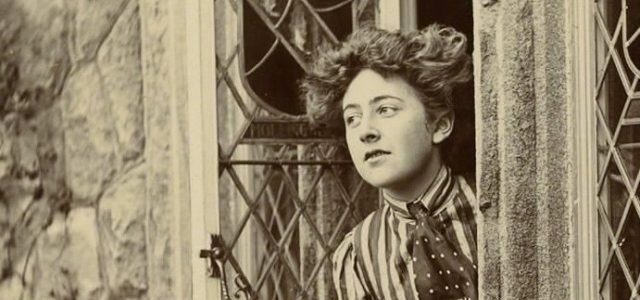
Agatha Christie in 1910
By Melodie Campbell
Some readers of Anne’s blog know that I taught fiction writing at college for over 30 years, going back to the early 90s. The dialogue below happened so often in class, I could phone it in.
- Me to adult male student: “There are no women in your book. Over 60% of books are bought by women. You might want to put in someone they can relate to.”
- Student: “Yes there is! See?” (pointing)
- Me: “She’s the victim. You kill her off on page two.”
Then much of the class sat dumbfounded, as I pointed out the “Campbell factor,” as they called it.
If you want to sell books to over 60% of the market, write real women into your books. Women we can relate to, and want to relate to.
HOLLYWOOD DRIVES ME CRAZY
The same applies to Hollywood. In so many movies released in the past twenty years, and by my count, the majority of action movies and thrillers, there are perhaps two women present in supporting roles. The victim and the babe.
That’s it. Not surprisingly, a lot of thriller books written by men sport the same two female supporting characters.
(To be fair, sometimes the babe is a villain. Lovely. I am encouraged to relate to a victim or a villain. Or – worst of all – the only supporting female character is a goodhearted prostitute. Please save me.)
Which is why the Bechdel Test came to be so famous. Do you know it?
To pass, a film must have:
- Two named female characters
- Who talk to each other
- About something other than a man.
Both Anne and I write mystery series that pass the Bechdel test. But you would be shocked at how few films measure up. You would be further shocked at how few films that pass the Bechdel Test show up on the ‘top ten list of favourite movies’ by my male writer friends, all good guys. (I did a test. And yes, even they were disturbed to discover this.)
THANK GAWD FOR AGATHA
I cut my reading teeth on Nancy Drew, and then moved on to Agatha Christie.
When I was a teen, Christie was my favourite author. She’s still up there in my top ten. It’s no surprise to me that she is the best-selling fiction writer in the world.
By why, you ask? Surely there are other greats from the same period, even other female authors – Dorothy Sayers, Ngaio Marsh etc – who wrote terrific mysteries.
Curious about that, I decided to look at what I liked about the Christie books and movies, as opposed to other great writers.
It was immediately clear. I could see myself in her books! I could relate, as there were several females, young and old, in all of her books. And they talked to each other! Far beyond the victim and the babe, Christie wrote female sleuths as well as female village characters (Miss Marple and Tuppence Beresford, for starters.) Real women of all ages, not just gorgeous young ones that needed to be murdered or rescued, or sat around waiting to be a reward for some hero.
WE MADE OUR BECHDEL TEST LISTS
So when I was challenged by my male friends to make a list of films that passed the Bechdel test, the first ones I thought of were all the Agatha Christie films that have been released in the past 25 years. And while I might not prefer the way Kenneth Branagh’s recent films deviate from the books, they still pass the Bechdel Test with flying colours, so they’re on the list. Here’s a sample:
- Death on the Nile
- Crooked House
- Murder on the Orient Express
- The Secret Adversary
- And Then There Were None
- Murder in Mesopotamia
- Why Didn’t They Ask Evens?
- 4:50 From Paddington
- Murder is Easy
- Endless Night
- The ABC Murders
- The Moving Finger
- All of the Miss Marple films (too numerous to list here)
WHY IS THE BECHDEL TEST IMPORTANT?
Why is it important to see characters you can relate to and admire on the silver screen?
As someone who went to business school in the last century, and had no female profs for the entire four years, I can tell you the following:
Not only do you have no role models, but if you aren’t seen, you aren’t heard.
Everyone wants to be seen and heard. Everyone of all ages and gender.
And as the world sits now, it’s more important than it ever was.
by Melodie Campbell (@MelodieCampbell) April 19, 2026
What about you, scriveners? Do your stories pass the Bechdel Test? Do you enjoy reading books that have a mostly all one-gender test?
 About Melodie Campbell
Melodie Campbell’s books always pass the Bechdel Test, but with a large dose (some might say overdose) of humour.
Called the “Queen of Comedy” by The Toronto Sun, and compared to Agatha Christie by The Toronto Star, Melodie Campbell writes capers, heists and golden age mysteries. Winner of ten awards, including the Derringer and the Crime Writers of Canada Award of Excellence, Melodie has 18 books and over 60 short stories, but she got her start writing stand-up. The Pharoah’s Curse Murders is her 20th book.
(She’s also one of Anne’s favorite authors. 🙂 )
BOOK OF THE WEEK
THE PHARAOH’S CURSE MURDERS
Series: A Merry Widow Murders Mystery, Book 3
Genre: Historical Mystery 1920s
Release: April 2026
Format: Print, Digital
Amazon | Barnes & Noble | Cormorant Books

It’s the winter of 1929, and Lady Lucy Revelstoke and her pickpocket-turned-maid, Elf, are back in the third installment of The Merry Widow Murders ― this time voyaging to Egypt. Lucy is particularly interested in the ancient sites, and Elf ― well, Elf is keen to find out how the tomb raiders mastered their trade!
The voyage should be a treat, as two rival teams of archeologists will give lectures while on route to their digs. Old-school Doctor Phineas King and his daughter, Isla, make up one team, while the other’s led by flamboyant, privately funded American adventurer Anton Margolis. Both teams seek to discover a prized tomb, despite local whispers of a curse that befalls upon all those who dare to disturb the pharaoh’s grave.
Soon, an archeologist drops dead at a cocktail party. Is this the work of the pharaoh’s curse, or someone with a personal motive? As accusations of antiquity smuggling come to light and a distraught clairvoyant predicts more violence, Lucy and Elf race to find the fiendish murderer before they strike again.
***
Featured Image: 1910 image of Agatha Christie as a Young Woman courtesy of Wikicommons


Thanks for those kind additions to my bio, Anne! It’s always a pleasure to be on here, my friend.
Melodie–I had to add how much I enjoy your books myself. They are the perfect escape from this insane world we live in now.
You do my heart good, Anne! Thank you so much.
A wonderful and funny, and points to the obvious, post, Melodie! Always enjoy your visits to Anne’s place. :O))
Do TV shows count in Bechdel testing? I’ve gotten endless teasing for being a fan of Murder She Wrote for decades and particularly love some of the episodes where Jessica ‘woman-splains’ things to the male characters.
Thanks for the grins today…
Thanks so much for this wonderful comment, Maria! Yup – Murder She Wrote was a breakthrough show, and I loved it too. Also, the Brit shows like Vera, Madame Blanc, and so many recent ones lead the way! No wonder I prefer Brit and Aussie to American these days.
Wahoo to the Bechdel Test. Oh that most books included characters that people of all varied persuasions could find themselves in.
I so agree, CS! Thanks for commenting 🙂
Great post, Melodie. Thank you for telling us about the Bechdel Test! I had never heard of it, but I have a feeling I’ll be watching and reading with it in mind from now on.
My books all have female leads, and in five of my six novels, there are two females (protagonist and deuteragonist) who are the amateur sleuths. Maybe I should market the books as “A+ on the Bechdel Test!” 👧👧
Kay, I think you’ve hit upon a new marketing theme: Passes the Bechdel Test! We shoudl create a badge for the book cover – grin. Thanks for commenting!
Thanks for shining a spotlight on this, Melodie. Like you, my early influences were Nancy Drew and Agatha Christie. My 3-book series features a female protagonist and an older woman supporting character. While 95% of my readers are female, I’m occasionally surprised by the occasional male fan. I think part of the discrepancy lies in the attitude of men, especially those who run media companies, who have little interest in the inner lives of women.
Ain’t that the truth, Gay! Your last line is dynamite. Thanks for commenting!
I would like to add Dianne Emley to that list, with her Nan Vining series, The First Cut, Cut To The Quick and the Deepest Cut!
Thank you for commenting, Dennis!
For those of us who are new to the Bechdel test it is very eye opening to see how infrequently it is followed. Thank you.
Mike thank you for mentioning this. I think many men simply aren’t aware of the absence of substantive women in film or thriller books. Alas, it is Hollywood’s norm, so doesn’t raise eyebrows. I’m grateful that men like you are taking note.
I enjoyed this article though it’s probably an understatement.
I recall a conversation between my dad and my uncle I overheard as a child. They were commenting on the movies and how “there always has to be a woman in them.”
At the time, I thought, “they’re right about that seems to me.” I was probably seven years old.
They weren’t irritated but perhaps a little annoyed that there seemed to be some kind of rule that required a token woman in every movie.
It never dawned on them or me at the time that there could be a world where the rule would be that every movie had to have a token man in it.
Oh my, this is powerful! I’ve never heard it better said. Thank you for this comment. I’ll be thinking about it for a long time.
But wait… how about:
— Edge of Tomorrow (one of my favorite Sci-Fis)
— Alien
— Gravity
— Terminator
— Silence of the Lambs
(note the EM dashes 😉
Harold – great movies! I was a sci-fi fan from way back, and one of the reasons was the presence of women in sci-fi lit. I could see myself in those books. It almost seems like crime thriller have regressed.
My three fantasy books all have major and strong female characters. In Witchery, the protagonist is a young woman, and she is the focus of the cover and the tag line. In Saving Atlantis, the cover art features two women. They don’t talk to each other much in the story, though. They hate each other. My other one, Prophecy of Honor is told in first person by a man, so the women are more secondary, but all three are strong warriors and do communicate and work together.
This is something I picked from decades of reading Heinlein. Most if not all of his adult novels have strong female characters, and at least two are told in first person by a female character.
I used to read Heinlein too, Fred. Thanks for commenting!
Excellent topic. I can’t wait to share for WriterWednesday.
Great article Melodie,
(& thankyou Anne as always, for your top-notch curation of guest posts).
I’ve heard of the Bechdel test in recent years, albeit always in terms of Hollywood films. Never seen it applied to other media, especially books.
As a male writer I immediately scanned my own work and here’s the results:
* My memoir…. “PASS”
I’m lucky to have worked with some ‘kick-a** chicks’ at my giant-killing youth radio station and they dominate a few scenes that are pivotal to the plot. I’m glad to report they’re talking about “whats happening” rather than “who they fancy”.
* 25 years of Radio ad-writing… “PASS” (qualified, with more work to do)
I know that advertising isn’t the focus of this blog, but worth it’s mentioning my 9-5 because this stuff shapes culture.
The women in my ads are usually talking about product-related issues rather than men. Having said that, I do try to bend away from stereotypes eg Having a male voice do caring/parenting ads… etc. But it can be challenging to push against some people’s “default casting”. The problematic ads you hear may have been ‘better’ before changes were made.
Margery Alllingham is another one! I love her dialogue in general – it has life in it. Women talk to each other about money, careers, fashion, murder (natch), and much more. But Agatha Christie is great – I’m sitting here revisiting all the scenes of women discussing the state of the world or their lives in my mind.
Sheena–I’m glad you brought her up. I’m re-reading some of my Margery Allinghams right now. Albert Campion is so refreshing after reading those modern macho thrillers with characters like Jack Reacher. The heroes of the “Golden Age” mysteries are totally at home in their own quirky skin and don’t have to prove their masculinity like modern “heroes.” Poirot, Lord Peter, Inspector Alleyn–none of them need to behave like lower primates or put women down.