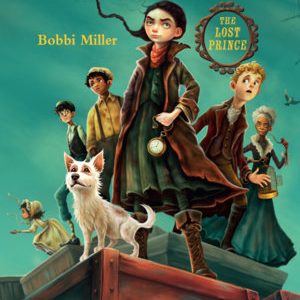
by Bobbi Miller
I pitched my new book, Barbary Chronicles: The Lost Prince (Charlebridge Moves, 2026) as Oliver Twist meets Deadwood. The protagonist, Jack London, along with her crew, live in the shadows of San Francisco’s elite. Much like Charles Dickens wrote his story to expose the hypocrisy and cruel treatment of orphans in mid-19th century London, I blend a grim realism of a child’s life during the 1870s with tall tale humor to describe the effects of industrialization, creating a story of children trapped in a life with no hope. Jack and her crew build a community that brings together their diverse experiences, to discover that in rising up, united in resistance, they empower each other to create their own destiny.
Interview Your Sidekicks
At the heart of Jack’s story are the loyal sidekicks. Because I like working with a cast of characters, and I blend real life legends with frontier myths, I use character interviews at the start of a project to help create dynamic, complex, flawed characters. And these interviews help me to keep track of everyone’s progress throughout their story.
There are many templates of character interviews available with a simple online search. But a few key questions to ask your sidekick focuses not just on their relationship to the hero but also on their own motivation, and purpose, in the story. What trauma did they experience that continues to impact them? What secrets do they carry, and how does this secret impact relationships? If they fail, what happens? What do they expect to happen if they succeed? Find out what is the worst thing they have ever done, and how does this impact their current choices? What do they fear?
Give Sidekicks a Presence
Sidekicks need to have a presence of their own and not merely serve a function of the plot. They have backstories, with goals and motivations of their own. Supporting characters, well, they support the hero much like a support beam in a tall building. They provide the framework of the narrative. Also, they can offer perspective whenever the hero fails to see.
Jack London is an important symbol in San Francisco, embodying a gritty and adventurous spirit. In my story, I transformed this spirit into a trickster, a clever survivalist who embodies wolfish courage. Her ex-best friend Charlie is the steady foil. At first they seem like opposites, much like success and failure seem like opposing forces, but really, one can’t be without the other. They’re companions. The great lesson of a relatable sidekick: the best journeys are the ones in which you don’t walk alone.
Give Sidekicks a Personality
Sidekicks need more than mere presence. They need personality, complete with foibles and quirks.
Another important supporting character – she would loathe to be called a sidekick – is Lady Jane, the saloon lady with a heart of gold. But Lady Jane can be as ruthless as Fagin, especially to her charges as she challenges them. Some of her charges are based on documented legends of the era. Oofty Goofty, for example, was a popular street performer of the day who couldn’t feel pain. In my story, he recites poetry at the drop of a hat. Other sidekicks include Puddin Foot, a soft-hearted giant abandoned by his mother because he ate too much. Cordwood Pete is a tunnel rat and younger, shorter brother to Paul Bunyan. Kuruk is a fellow smuggler and Cordwood’s cousin, who speaks backwards.
The white and brown rescued terrier, Alaska, personifies the loyal sidekick. Each of these sidekicks, including the dog, are distinct personalities that often clash with each other, just like any family, which in turn builds tension and help move the plot forward.
Sidekicks Reinforces the Theme
Secondary characters personify and reinforce the narrative’s theme. Oftentimes they provide the emotional depth of the story. They are more than props. They are the companions that keep the protagonist going when all is lost. A sidekick can be a mentor who advises, or a foil who provides contrast, nagging the hero that they are doing everything wrong. The sidekick has their own needs and wants and suffer from their own traumas. They also have their moment to shine.
And they are often dynamic in nature, changing in interesting ways as they connect with the protagonist. And to the reader. For this reason, I am a firm believer in outlines, albeit outlines are not carved in stone and often evolve as the characters evolve. The outline maps out the narrative that ultimately shape the story. Whether it’s the three- or five- act structure, or save the cat, or a snowflake method, the core elements remain the same: timeline, significant plot points for both action(external) and emotional (interior) character movements, rising action and climax. There are many templates available online, or you can use your own. What works for me is using the character interviews to fill in the outline.
In the end, the best of sidekicks are personable individuals whose presence transforms a story into a rich, living world, adding texture that engage readers on a deeper level.
by Bobbi Miller November 15, 2026
What about you, scriveners? How do you approach sidekicks? Do all your sidekicks have backstories of their own? Have you tried interviewing them? Do they have quirks?

About Bobbi Miller
With a background in American folklore, Bobbi earned my MFA in Writing for Children from Vermont College and was awarded honors with distinction for her Master of Arts in children’s literature degree from Simmons College in Boston.
She writes historical fiction, focusing on forgotten characters (usually girls) and events that helped build the American landscape. She writes historical American fantasy, blending the tall tale tradition and character that captures so much of the American identity, and a unique form of fantasy. Action-adventure stories were always some of her favorite reads. Pirate stories, hero tales, Robin Hood, King Arthur, James Fennimore Cooper, and Edgar Rice Burroughs—these and many more were favorites.
She has a background in folklore (having studied it at the associates and undergraduate level), and realized that many of the best adventures are on our own landscape. She says that telling a story is like singing a song. A good story has its rhythms and its refrains. Words sway and swing and slide across the page. When we read a good story, it feels like we’re dancing.
BOOK OF THE WEEK
The Barbary Chronicles
The Lost Prince
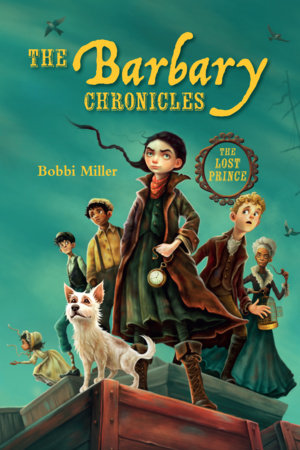
By: Bobbi Miller
The game is on!
No one plays the game like Jack London. Only eleven years old, she can pickpocket and flummox any unsuspecting rube who wanders into the muck of the Barbary Coast.
All Jack’s skills are tested when one of her own falls ill and she pinches a gold pocket watch to pay for a doctor. The watch belongs to the richest man in San Francisco, and it plunges Jack into a whole world of trouble. She soon finds herself on the run from rival gangs, corrupt coppers, and the ruthless, self-proclaimed King of the Barbary Coast.
Jack may be little, but she’s clever and bold. With the help of a devoted stray dog, a kidnapped prince, and the scummiest ex-best friend ever, she’ll do everything she can to save her found family.
For More Information
For more information about Barbary Chronicles: The Lost Prince, visit the book page at Charlesbridge Moves:
You can find more information about Bobbi at TeachingAuthors, a team of children’s book authors with a wide range (and many years) of experience teaching writing to children, teens, and adults.
Or visit her at Smack Dab in the Middle, group of middle grade authors, teachers, librarians and other professionals all banding together to discuss MG books.


Bobbi, thanks for giving some love to underrated sidekicks. They can do a lot to bring life to a story.
I hadn’t thought about a sidekick reinforcing the theme but that’s an excellent job for them to perform. I’ll keep that in mind in my WIP.
Your characters sound like great fun.