
By Anne R. Allen
This is an updated version of a post from 2023, but there are so many more scammers approaching us now, writers need to be hyper-vigilant.
Unfortunately, a lot of new writers often know very little about the publishing industry and how it works, and they’re usually full of hope and naïve optimism. Which makes them ideal targets for predators.
Scammers are getting more and more sophisticated. Many of them use AI. They often impersonate real agents, famous writers, film directors, or publicists. Most don’t have websites, but sometimes they spoof the website of the person they’re impersonating. This stuff can be amazingly convincing. If anybody tells you you should be able to spot “AI slop” at a glance, don’t listen to them. This is compelling, sophisticated stuff.
If you belong to a writer’s group or club where new writers congregate, spread the word. Save your friends from losing thousands of dollars — and getting their hearts broken — by sharing the following facts.
1. Famous Authors do NOT Have Time to ask Unknowns about their “Writing Journey” or Recommend Agents.
What? That wasn’t actually Oprah or Colleen Hoover or Catherine Ryan Hyde who wants to be my bestie? That’s a bogus agent she recommended? What about my writing journey? She doesn’t care about me anymore?
Um, nope. Because she’s never heard of you. This is one more impersonation scam, and the real authors are seriously annoyed by it. The scammer asks for money or sends you to a scam website and disappears. But then the real author is contacted by irate writers who believe the famous author ripped them off.
Here’s Catherine Ryan Hyde on the subject:
“I keep hearing from newer authors who say “I” contacted them on social media with some kind of offer. I just heard about a new TikTok account pretending to be me.. A few days ago I put a warning on my website home page for the first time ever, basically saying it’s not me contacting them on social media. And now for the really bad news: Will this get better or worse? I think we all know the answer”.
Help Catherine and all those other busy authors: don’t fall for this scam!
2. If you Pay Money up Front, it’s Not Traditional Publishing.
I’m still seeing new writers in FB groups who say. “Agents charge so much! I can’t afford to traditionally publish.”
Um, yes you can. Because it’s free. You don’t even have to pay to send your manuscript with a stamped, self-addressed return box via snail mail the way we did back in the 20th century. Agents work on commission. They only get paid if they sell your book.
Not that you have to traditionally publish these days. Often indie authors make more than trad-pubbed ones. So if you want to self-publish, do it. (But please don’t self-publish your very first finished title. See #5 below.)
If you need help, use BookBaby or some other self-publishing assistant that doesn’t pretend to be a publisher. Or go to Reedsy or Alli and find vetted editors and designers yourself.
But never do business with a vanity publisher that pretends to be a traditional one. They will rip you off and stomp on your dreams.
Yes, there’s such a thing as hybrid publishing, where you shoulder some of the costs of publication. However, many publishers who call themselves “hybrid” are really vanity presses in disguise, who publish anybody who can pay. New writers aren’t usually savvy enough to know the difference.
3. Book Clubs do not Charge Authors to “Feature” Their Books.
This is the biggest scam hitting authors right now. I’m sure you’ve all heard from these scammers who use AI to bamboozle you with flattery. But it’s just another scam, with AI enhancements. Some of the book clubs they claim to represent do exist, but the sender has nothing to do with the real club. It’s all a big, fat lie. Give them money and they will evaporate and so will your money.
This scam is aimed mostly at authors who have books for sale on Amazon, but I’ve heard from unpublished authors who get these too. I’ve written about these Nigerian scammers extensively on this blogpost and this one. And you can read more details at Writer Beware.
If you’re like me, you’ve probably heard from these “book club” representatives (often with improbable names like Mercy Herpes, Beloveth Beloveth, Brain Steven, or Sparkle Victorious–actual “names” in my inbox today.) I cringe when I see authors on social media trying to figure out which email is legit. NONE of them is legit. Not one single email solicitation. All that flattery about your book is AI. It’s all an illusion. Yes, AI is that good, unfortunately. I got one yesterday with a tongue-in-cheek greeting accusing me of keeping him up all night with my compelling mystery. Sounded 100% human. But it’s not.
Real book clubs choose books to read all by their ownselves—and buy them or get them from the library. That’s it.
4. The Scammers are NOT Gonna Put You in the Movies.
Netflix, Amazon Prime, a famous film director and / or a movie star will not contact an unknown writer.
Bigwigs in the industry will have their people call your people. If you don’t have people — like a well-known agent — they won’t do business with you. If anybody contacts you and claims to be Reese Witherspoon, Spielberg, Guillermo Del Toro, or their representatives, hang up or send the email to spam. They are all nasty scammers.
And if you pay a lot of money for a screenplay of your novel, what you have is an expensive screenplay, not a movie deal.
The same is true with book trailers. Yes, you can spend a ton of money getting somebody to make a “trailer” for your book. But what are you going to do with it? Beg your FB friends to watch it? Yeah. Big whoop. Lots of money down the commode.
Scammers love to play on writers’ Hollywood dreams. They approach a writer with wild promises about how a bigwig wants to make your book into a film. But there’s the little problem of a script. So, for a (huge) fee, they’ll get somebody to write one for you. If you’re lucky, they may send you a script, but then they’ll disappear. There’s no bigwig.
Pretty much everybody in the greater LA area has a screenplay. The chances that yours will be picked up by a big studio are about 9.75 million to one.
5. Most First Novels Go Unpublished—Don’t Believe the Scammers.
Alas, it’s true. You may see lots of articles about “debut novels” that have soared to the top of the bestseller lists and are making big bux for all concerned. (Hello, The Correspondent.)
Thing is—that isn’t actually the author’s first novel. It’s the first one that got published. Big difference. They probably have at least 5 much-rejected novels in their files.
Go ahead and query a few agents with that first novel you’ve spent years on, but please don’t self-publish it. You’re bound to regret it later on. This is because you’re going to become a much better writer after you write your second novel, or your third, or…
Learning to write well takes a long time. Later on, you’ll see a lot of stuff in that first opus that needed a lot of work. I queried my first novel way too long instead of putting energy into a new one. I recently found my queries and rejections for that book in an old filing cabinet. Talk about cringe! I had to burn them all.
6. Literary Agents Don’t Contact Unknown Writers who have Not Queried Them.
Unless the writer has a self-published book that’s at the top of all the bestseller lists, this doesn’t happen. When most agents have slush piles the size of Everest, why would they?
Maybe if you pitched to the agent at a conference and gave them your card you might get a call, but it’s not common. Especially if they’re calling about a self-published book that hasn’t sold.
7. Agents are not Marketers or Book Promoters.
Agents don’t “endorse” or “nominate” a book. They represent it to publishers. There are some ignorant scammers out there who assume you’re even more ignorant than they are.
They will say a publisher / film studio / movie star is interested in your book. But it has to be “re-published” at great expense. You will have to pay major fees for “book insurance” and then they will “endorse” it to this major publisher, or “nominate” it for consideration by a film studio.
What a load of you-know-what. “Republishing” is not a thing.
Before you interact with someone who claims to be a literary agent, visit some agents’ blogs and read about what agents really do.
And even if this fake agent has a website, he’s still fake. Anybody can make a website these days.
8. Nobody in the “Big 5” wants a Failed, Self-Published Book.
Sorry. I know that’s discouraging. But big publishers only want bestsellers. That means the book that hasn’t had any sales since your mom’s book club bought ten copies two years ago is not going to sell to a major publisher. Throwing money at it is a very bad idea.
Yes, even if somebody swears the Random Penguin hisownself is jonesing for your deathless prose.
I can 100% guarantee no Penguins are involved. Go write a new book.
9. Scammers Sell Junk Marketing Packages via Vanity Presses and Unknown “Publicists.”
All those publicists who contact you via social media and email are guaranteed to be scammers. If a publicist can magically make an unknown writer into a superstar, believe me, they’d have more clients than they could handle. They wouldn’t have to spam unknown authors.
And millions of Tweets, reels on TikTok or Insta, placement at a book fair, spotlights, and interviews on unknown websites or podcasts, etc. will not sell books. Nor will absurd promises to get you interviewed by the NYT or People, or put you on a billboard in Times Square.
They may get you a $500 interview with a character actor named Lawson Crawford, that nobody will ever see.
And the scammers will empty your bank accounts.
10. These Scammers are Dangerous Criminal Organizations, not Some Guy in his Mom’s Basement with Time on his Hands.
Almost all these scams come from organized crime gangs in impoverished parts of the world, especially the Philippines, Nigeria, and Southeast Asia. The people contacting you are often abused workers forced to work long, grueling hours.
Just this week, China executed the members of a Myanmar gang that kidnapped and enslaved Chinese workers to perpetrate their scams.
Yes. The “scammers” were actually slaves. They don’t need your anger, so don’t waste your time trying to “play games” with them.
For a fascinating look at the downtrodden workers seduced into working these scams, read the novel I Do Not Come to You By Chance by Nigerian author Adaobi Tricia Nwaubani . It’s enlightening.
by Anne R. Allen (@annerallen, @annerallen.bsky.social) February 1, 2026
***
What about you, scriveners? How many of these scammers have approached you? What’s the most common scam email you’re getting these days? Do your scammers have any silly names you want to share?
THE HOUR OF THE MOTH
A light and funny beach read just right for escaping the snowpocalypse or taking a break from the ICE storms.
Ebook and paper book available at Amazon. Paper book also available at Barnes and Noble
NPR fans, there are Easter Eggs in this story just for you!
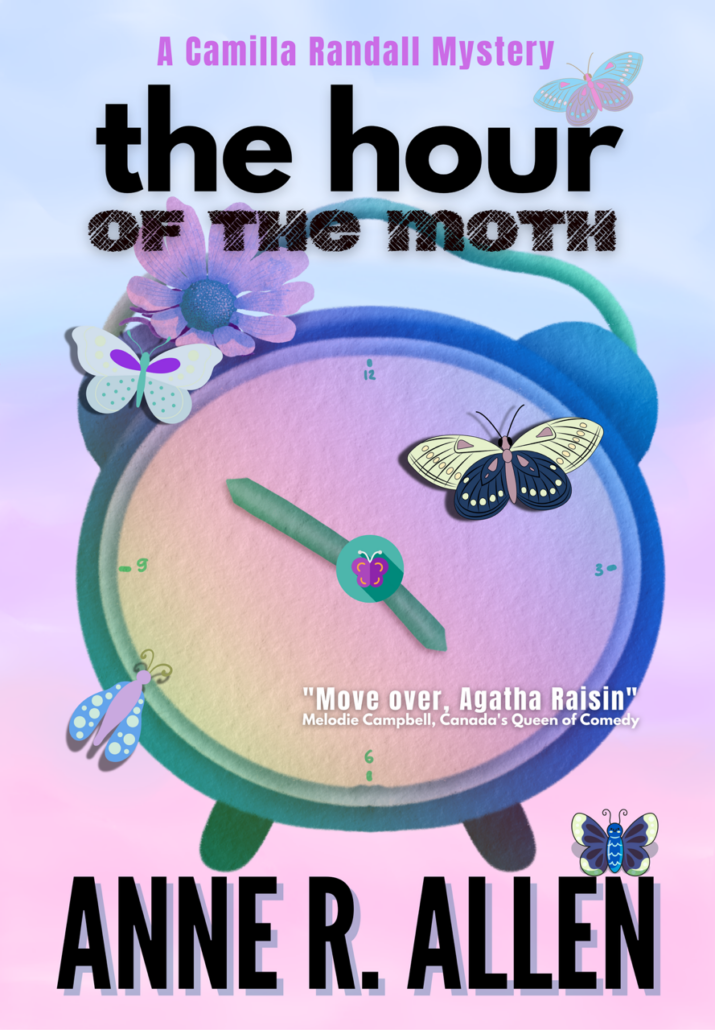
When Camilla Randall allows a neighboring business to hold a “Moth Hour” storytelling event in the courtyard of her beachy California bookstore, she finds an inconvenient corpse left in the audience after the event. The deceased, a storyteller famous for his appearances on NPR, turns out to have a shady past — and a lot of enemies. Unfortunately, Camilla’s boyfriend Ronzo is one of them.
***
Featured image by u_wuwiwxkylg from Pixabay


All types have approached me. The most common lately are book clubs and marketers.
They know authors are starting to get wise so they dangle *free* website optimization,
*free* marketing assessment, or a *no-obligation* chat about the future of my soon-to-be bestseller.
I cringe when authors talk about outsmarting or playing games with scammers. Any time you engage with them in any way, you’re gonna lose. If not money, then valuable time when you’d be better off writing. When authors answer in ANY way, scammers know they have a live email and will keep pestering.
Thanks for the warnings, Anne!
Debbie–Oh, yes–that “no obligation” phone call. Sure. I’d love to give my phone number to a criminal who can harass me any time of day or night! Haha! You are so right about engaging with the scammers. They have scripts for dealing with any eventuality, and they only take it as encouragement. And it’s good to remember the people you engage with are gangs, not one human being. And the gang workers are bullied or even enslaved by the criminals in charge, so calling them names only adds to their opression.
I wrote a reply, but I didn’t have a comment button, so I went back and started again.
These scams are increasing. I’m getting several a day.
We can notify longer rely on the old ways of telling if something is a scam, via bad grammar. AI has sorted that.
Now, they are sending emails commenting on specifics of your book that make it seem they’ve actually read it. Of course, it’s AI that’s doing it.
And these emails are very flattering.
I report them as spam and block the sender.
And I recommend The Hour of the Moth. My review is on Amazon and Goodreads.
Vivienne–I’m sorry that the WP elves ate your comment button. The ways of tech are mysterious. I keep thinking these scammers have to give up at some point, but right now, they keep sending out more and more of this crap. Yesterday I got one of the old fashioned emails, addressed to “My dear” 🙂 and I laughed. It was almost refreshing to get something that primitive. And yes, it’s important to report these missives as spam and block the sender, even though it seems futile. Eventually, gmail and other programs will learn and their spam elves to block this crap.
Thanks so much for reviewing the Hour of the Moth!!!
One must wonder about people’s souls.
CS—Organized crime bosses are not known for their empathy or compassion. Do check out the Nigerian novel I recommend in #10. These naive workers were told that the US and the UK will reimburse the victims of financial crime so they see it as a victimless crime.
Anne, your number 10 should be shouted from the rooftops! And yes, I have received word of people ‘who have been contacted by me.’ It breaks my heart. Another Important column I will tell others about!
Melodie–Thanks for sharing this with other writers. It’s so important to realize these scammers represent big business in some developing countries. It must be so frustrating to be impersonated by these creeps. This damages your reputation as well as conning the newbie writer.
Wow Anne! Spot on and timely. Last year, I received correspondence via Social Media from someone who claimed to be a producer of Netflix movies. That person stated he was interested in my true crime memoir. It seemed too good to be true…and it was. However, for one or two days, I found myself daydreaming about such an opportunity, about getting this break. However, I prayed to the patron saint of new writers (You!) and found the discipline to question such an offer. I wrote back to this person asking for an in-person meeting. Never heard from the “producer” again. Thanks for watching over us Anne and protecting us from evil!
Ken–We all have those daydreams, don’t we? You think, this happens to some people, why not me? And when the approach is a slick AI chunk of flattery, it’s tough to accept that it’s all lies. Asking for an in-person meeting will usually get a stonewall response, since 99% of these folks are overseas. But sometimes they will continue to engage, thinking they have a victim on the hook and they only need to reel you in. So the best response is report as spam and block. Spread the word!
Anne, there’s good news and there’s bad news. The good news is that I don’t get any emails like that. The bad news is that scammers don’t know about me because my books are not known well enough to tempt them.
Is there any kind of way to present my books to book clubs to consider?
Thank you for another cautionary post.
Fred–It’s more likely that you’re just lucky. Or maybe they choose victims in alphabetical order. I get these emails addressed to dozens of writers with “Allen” in their names–the gang thinks all Allens have the same email address. One Ms. Allen has a volume of religious poetry that costs $80. 0 reviews, and as far as I can see, 0 sales.
As for book clubs, this might be a whole blogpost. Authors don’t present books to book clubs. It’s not a thing. Most book clubs are small, intimate groups (mostly women) that meet in each others’ homes. Choosing books can be fraught with conflict. Every member has a pet book they want everybody to read. An author stepping into that mess could get clobbered. As far as celebrity book clubs like Reese’s and Oprah’s–you need to already be on the radar to be considered, and I don’t know of any indie books that make it.
If you want to be considered for book clubs, you need to write “book club fiction” –that is, women’s literary or “upmarket” fiction. It helps to put “book club questions” at the back of the book to aid in discussion.
I’ve learned not to follow any writers on Bluesky unless they have at least some followers and have published more than 10 of their own posts.
I do this as I recently followed quite a few there, most of whom looked new and had only published posts of other writers and authors on their timeline. Within seconds of following most of them, I get a nice message welcoming me, but then go on to say that they notice that my books are not getting any publicity and that they can sort it for me. They all send me the exact same messages (word for word), which highlighted to me that I’m talking to a bot rather than a real person. Scam alert.
Hugh–Thanks for bringing this up! I discovered early on that Bluesky had an amazing number of bots, so I don’t follow anybody who doesn’t have a decent bio and many posts. The bots send a DM as soon as you follow them, and keep harassing until you unfollow. The first day I was on, “Liane Moriarty” followed me. I was naive enough to think it was the real Liane, so I responded to her questions about my writing by asking “her” to guest post on this blog. She disappeared. 🙂 But I should have been warning others about these Bluesky scammers. Thanks!
My rule of thumb, if I didn’t contact you, and you are offering to do anything with a book you haven’t read, which shows in your email…it is sent to spam and blocked. I get over 20 a day that go automatically to spam.
I’ve seen them all, including the movie promoters, the famous people, the agents, the publicists, the fake editors etc. I learned the hard way about vanity presses to the tune of $3k. So I do not believe any of the nicely written spam containing empty promises. I even turned one number into the feds for stealing an unpublished book. He was USA based.
Barbara–I’m so sorry to hear you got hit by a vanity press. You’re not alone. As far as scammers talking about a book they haven’t read, this is where the AI scammers have the advantage. They write paragraph after paragraph about the details of your work: scenes, minor characters, tone, and character arcs that do a great job of appearing to know the book well. This is what the current Nigerian gang is doing. But of course all the classic scams are out there too. Great that you reported the one who stole your unpublished manuscript.
Oh yes, the scammers are out in full force. I get plenty of those ‘bookclub’ emails who’d like to read and review my book. Okay, so why do you need to email me telling me you’d like to review my book? Lol. Then there are the ones that ‘love my book’. I usually delete, but sometimes I’ll reply asking which book? Lol. Last week I got one from Alice Walker thinking my book (which one) should become a movie. Lololol. 🧡
Debby–Haha! Alice Walker? You rate! I got one that said my how-to book The Author Blog would make a great film. Yeah, sure. 🙂
Anne, I love your blogs and subscribe to them. I urge everyone to do so and post them on FB. I warn about vanity presses all the time and am discouraged when naive writers are taken advantage of–again and again. If you remember Sheri Williams and Touchpoint (Arkansas vanity press that was shut down by the AG and DOG), I hate to say it, but she still has some defenders. Maybe they just don’t want to admit they were conned. They’ve moved on to new vanity presses including NY Book Publishers which is being investigated by the BBB. Ridiculous claims on their website (we’ve produced 250 #1 New York Times bestsellers!), posting books on the website by famous authors (pretending they produced the books) and more. They urge their clients to pay to have their book “made into a screenplay” and suggest that “Hollywood will snap it up.” Apparently hope springs eternal and they are easy marks. Mary Kennedy https://www.facebook.com/mary.kennedy.948/ http://www.marykennedy.net
Mary–Oh, they just keep getting worse, don’t they? And there will always be some defenders who can’t admit they made a mistake. I’m so glad to hear that NY outfit is being investigated. The lies are so blatant–pretending they’ve published bestsellers that were published by the Big 5. Another thing Catherine Ryan Hyde told me is that some of these scammers put her picture on their website and claim she’s “endorsed” them. Shameless!
Yup, my email box gets fake offers to upsell my books. Hilariously, my reference book on writing book reviews, every week I get an offer to pay someone to write reviews for it. Crazy! And it’s all AI generated spam, which is even worse.
Excellent list. I just finished reading and reviewing your book about author blogging. Very enjoyable.
J (he/him 👨🏽 or 🧑🏽 they/them) @JLenniDorner ~ Speculative Fiction & Reference Author and Co-host of the April Blogging #AtoZChallenge international blog hop
Jlenni–That’s hilarious. Even better than describing my blogging book as a romantic, heartfelt story. AI gets it wrong so much of the time, doesn’t it? Many thanks for writing a review!