by Anne R. Allen
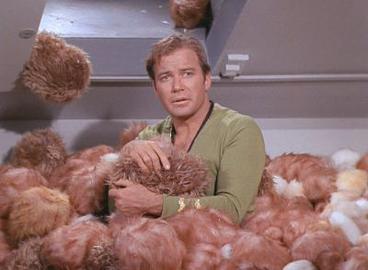
The AI book marketing scams are proliferating like Tribbles. I’ve probably had more than a thousand emails from them since mid-summer. Like Star Trek’s Tribbles, the emails approach you with warm and fuzzy friendliness. But don’t be fooled.
These scammers wouldn’t be so relentless unless this stuff is working. That means a lot of writers are falling into their traps. Spread the word to your fellow writers: those flattering emails that sound like the dream review you always craved, are all nasty scams.
They are all AI-generated scams perpetrated by a gang of professional crooks. Nothing they offer is real. They will rob you of thousands of dollars, and you may lose control (and royalties) of your own books on Amazon.
I’ve become something of an expert on these AI book marketing scams, because my email address has now been assigned to at least seven authors. (AI isn’t always accurate, guys.)
- Anne Allen (no “R”), a Brit who writes romantic novels set on the Island of Guernsey
- Annette R. Allen, who writes very expensive books of religious poetry
- Allen Iverson, the basketball player who wrote a memoir this year
- Eve Harris, author of several memoirs
- Ann T. Allen, a retired history professor who has written scholarly works on the Weimar Republic (and is my cousin 😊)
- R. Allen, who seems to write thrillers
- Somebody named Rogers who is famously a member of the LGBTQ+ community
Anne-no-R-Allen gets the bulk of the emails. These people LOVE them some Guernsey novels.
Some are even addressed to me. They’ve sent them about most of my published works. My favorite was the one that called my bestselling how-to book, The Author Blog: Easy Blogging for Busy Authors “a raw and heartfelt memoir.” 😊
So Who’s Perpetrating These AI Book Marketing Scams?
Victoria Strauss at Writer Beware and some of her readers were brave enough to reply some of these email solicitations. They all seem to lead to a Nigerian gang, perhaps consisting of former “Nigerian Princes.” She’s got all the receipts and can prove where they are being generated.
Without AI, most of these people would be easy to spot. But their AI program seems to be sleeping on the job when it comes to naming these “marketers.”
Here are some of the most fun names I’ve had emails from in the past two weeks: Klutz Diane, Lovely Wealth, Precious Pixel, Esther Miracle, Victory R. Strong, Loveth Dominique, Delight Dicey, Faith Digital, Dawn Organizer, Honour Empyrion, and my favorites—Ibrinax Fdag (wasn’t he a character in the Hitchhiker’s Guide to the Galaxy?) and Salominarus Rexieno. (Perhaps a newly discovered species of dinosaur?)
Also, the email attached may be odd and not related to the phony name. I got one today from Blessing Pixel, whose email address is rashmarketer004@gmail. (They’re always throw-away gmail addresses.)
It’s Not Just “I Want to Be Your Publicist” Anymore
There are at least six different scams that come in the current barrage of emails. They sound different, but be assured, they’re all the same people who want to take your money and will disappear without delivering anything. Or they’ll deliver just enough that you’ll give them your Amazon password. Then you can say goodbye to your royalties forever.
This is the original scam that I’ve been getting for a couple of months:
Hire Me and I’ll Make you a Star!
Love your work! You are a genius. How can I make you a bestseller? Let me count the ways. These are the most elaborate. They include a long, glowing AI review of your brilliant book, full of praise for your awesomeness. Then there’s a list of all the ways they’re going to make you famous. That includes new keywords, optimizing your author page, social media blitzes, newsletter blasts, podcast interviews, etc.
Note: Victoria Strauss reports that not all of these people disappear after an initial payment. One author she has heard from did hire one of these people, and they delivered—after a fashion. None of their social media followers existed and the newsletter blasts went to randos who had no interest in the author’s books. The author was not only out many thousands of dollars, but she had to delete all her social media accounts.
The Newest Wave of AI Book Marketing Scams
Lest we get bored, these folks keep finding new scams to offer us.
The newest group of scammers often don’t always bother to give you a name or go into an elaborate AI generated review of your book. You’re mostly “Author” or “Hey.” These emails are often short and generic, but they do use some targeted praise.
1) Hire Me to Make you a Book Trailer.
Love your work! You are a genius, and I’ll make you a (very expensive) book trailer that will rocket your book to the top of the bestseller lists. How? That’s for you to figure out.
2) I Want to Recommend your Book to my (Nonexistent) Book Club.
This one is very popular right now. Love your work! You are a genius, so I want to feature your (usually unnamed) book at my book club, which has over 5000, 10,000, 100,000, 500,000, or whatever members who will all write you glowing reviews. Just tip each one $25. Note: Some scammers use names of real book clubs, but it’s easy to see they don’t read your genre and they sure don’t have 500K members.
3) I’ll Make you Famous on TikTok.
You’re a dumbass. You’ve got hardly any reviews. But I’ll fix that by featuring your book (always just the one) to all my 5000, 10,000, 100,000, 500,000 or whatever TikTok followers.
4) A Famous Author Wants to be your Bestie.
I’m impersonating a famous author. (I got one from “Liane Moriarty.”) How do you know I’m famous? Here’s my resume. I came across your book, and I’d like to know all about your journey as a writer. Because working authors have so much time on our hands.
They don’t ask for anything in the first couple of emails, but they are buttering you up to move in for the kill. Sometimes this is another bogus marketing scheme, and others lead to an old warhorse of a scam: you’re referred to a bogus agent who refers you to a bogus and very expensive “editing service.”
5) A Referral from a Rando You’ve Never Heard of
Victoria Strauss reports an offshoot of the Famous Author Scam I haven’t had yet. Somebody you’ve never heard of writes you a chummy email out of the blue and says she loves your work and refers you to a bogus agent. Or an agent who exists, but the contact info is all wrong. I have no doubt it will show up in my inbox this week. And probably yours.
6) I Wanna Buy your Book, but I’ve Never Heard of Amazon.
I came across your book on Facebook. But I’m too stupid and/or lazy to click on the link to your buy page, so will you please tell me where I can buy a copy of your book? This is either an invitation to be scammed or a phishing expedition. I haven’t got the nerve to find out.
A Scam for Bigger Press and Big 5 Authors
Just so you don’t feel left out, trad-pubbed authors are the targets of a current scam, too. This can’t be blamed on the Nigerians, but it is equally diabolical. This involves the Anthropic class action lawsuit. My friend Catherine Ryan Hyde clued me onto this one after a warning from her agent:
A company called “Claims Hero” offers to help authors with copyrighted works increase their settlement from the lawsuit. But they’re really tricking you into opting out of the settlement entirely. The motive isn’t exactly clear to me. They may be collecting the money themselves.
Please Spread the Word about AI Book Marketing Scams.
Many, many authors who are indie or with small presses are targeted by these Nigerian scams. Most of you are savvy enough to send the emails to spam. But enough writers are falling for this AI generated stuff that these people are getting rich and sending out more and more spam. Don’t let them. Tell all your writer friends what is happening and don’t let them fall into the trap.
by Anne R. Allen (@annerallen and annerallen.bsky.social) November 16, 2025
What about you, scriveners? How many of these AI book marketing scams have landed in your inbox? Do you get any that are intended for other authors with names similar to yours? Do you know anybody who has been taken in by these crooks?
***
BOOK OF THE WEEK
Named one of the top 101 books of all time on blogging by Book Authority!
Not a heartfelt memoir, but these tips will help with your newsletter or Substack as well as a blog
“This was a wonderful an instructive book written in a casual, conversational style easy for authors new to blogging to comprehend and digest. Anne R. Allen offers many tips on what to do and, perhaps more importantly, what not to do. I definitely recommend this book to any new writers looking for resources on starting a blog!” …Holland Kirbo

Only $2.99 for the ebook! And only $11.99 for the paperback
at Nook, Kobo, Apple, and Amazon.
***
Featured image from Wikicommons Creative Commons Attribution-ShareAlike 4.0 License;


I’m not sure if I should be insulted because the spammers have not found me or if I just have an amazingly good spam filter, but I am grateful for that. The first thing to do though, as you’ll agree, Anne, if one feels a communication may be legitimate, is contact Writer Beware or Victoria Strauss. At least one audio publisher does (or used to) contact authors they were interested in without a prior contact from the author, so that rarity a legitimate contact is possible, but the thing to do is check.
JR–It sounds as if you have a great spam filter. Also they may not be targeting Brits as much as Americans. They probably figure we’re more gullible. If you do start getting a barrage of similar emails, however, you can be pretty sure they come from scammers. In the rare instance when a legit publisher contacts you, yes, it would be wise to run it by Victoria if she has time. People often contact me to ask if an offer is legit. It usually isn’t.
I have had a number of these emails, all of which have been about books not authored by me! My surname, Morris is, I believe a relatively common one, but the messages sent to me have been for other people of the same name so are, I think randomly sent out by an email programme in the hope that they reach the correct Morris! Another (unrelated) scam which is doing the rounds concerns emails purportedly from WordPress and saying the company was unable to collect payment for your domain, and asking the recipient to log into a site (clearly not a WordPress address) and pay for the domain. Needless to say all such emails have been binned! Thank you for the warning. Kevin
K Morris–Welcome to the club! Isn’t it weird to get so much email aimed at people you don’t know? A common name seems to be the key to many of my misguided emails. And I hadn’t thought of it, but of course 100s of people named Allen are probably getting the emails about my book as well.
Thanks for the heads-up about the WordPress domain scam! I hadn’t heard about that one. I’ll spread the word.
Anne, thanks for an excellent summary of the different styles of scams. I’ve received samples of all of them.
The scammer’s job titles are even getting more sophisticated. Last week, one came from an “Amazon Marketing Therapist.”
We authors need therapy to survive all this AI crap.
Debbie–That’s hilarious–“Amazon Marketing Therapist”? I guess we all need therapy after dealing with fake Amazon marketers. Thanks for that one!
It’s sad that people are falling for these scams. I haven’t been targeted thankfully, but I hope I’ll be savvy enough not to fall for any of these. Thanks for keeping us on our toes!
D.D. It’s scary how convincing these emails can be, so I get why writers fall for them. I almost believed the first few I got. But forewarned is forearmed. Hit that spam button!
Very nice Anne. I’ve received many of these in my X DMs. “Tell me about your novel.” I tell them to read my pinned post. They never do… Hope you are doing well.
Matthew–X DMs are awful. I don’t answer them anymore, so they’ve died down, but that sure is where a lot of scammers go to troll for victims. “Tell me about your book, or your writing journey, or where I can buy your books” is kind of insulting as well as an obvious ploy. There’s your bio right there, probably with links to your website, and these people are too lazy to read it?
I am grateful my email address is no longer listed anywhere and I don’t get those. However, X direct messages are another matter. Maybe an article on how to spot those? (Most of mine seem to be authors themselves.)
Alex–I guess it’s better if you can avoid giving out your email altogether. But they sure can get you on social media: X, Goodreads, Facebook, and I even get them on BlueSky. Those seem to specialize in #4–the “I’m a famous author with nothing to do. Do tell me about your writing journey.”
I got the class action lawsuit one this week! I scratch my head, because our publishers are already up on this. I don’t think they’ll get many hits with this one, with trad authors.
But no matter, because I get 4 a day of the book club ones. Man oh man, I hate to think you’re right, and they are catching newer authors. It’s evil – and maybe we should write a book, Anne, about scammers of writers getting their nemesis.
Melodie–The word certainly is getting out on those Anthropic settlement scammers. But I guess they can hope…
It would be hilarious to write a book with you about scammers getting their come-uppance!
This is more evidence that people have more time on their hands than i do. Oy.
CS–These people are not incels sitting in their Grandma’s basement with nothing to do. This is organized crime. I think these Nigerians are working their asses off, sending 100s of thousands of these emails a minute. They can make a lot more money scamming stupid Americans than they can working legit jobs, but that doesn’t mean they’re not working hard.
holy cow I am tired of these. the latest round doesn’t even bother with the butter-up. it’s just a four line email with “can I make book videos for you?” or whatever they’re up to in that go-around. Once I actually checked on a genuine sounding name and book club and there IS such a person and such a website so I basically responded telling them to leave me a nice review and if they wanted to ask me questions (the book club), well, they clearly had my email. Crickets. (and also, the “where can I buy your book? what’s Amazon?” ones really make me mad)
Alma–Yes! The latest ones are a lot lazier, aren’t they? Maybe it’s a copycat gang, trying to hone in on the Nigerian’s market.
As far as the book club scam–they often use real book club names. But the legit book clubs know absolutely nothing about the scammers. So it’s not surprising they didn’t write back. They may be getting 100s of requests like yours.
I get mostly the marketing spammers in my Yahoo (because when I did the AH thing nearly two decades ago, Yahoo was my go to). I am waiting for the one who allegedly has nearly 180 happy clients that used his services to respond back to me to see what info I can get from him.
Yahoo is very good at collecting spammy e-mails from scammers for me though.
GB–180 happy clients? Really? 🙂 Yeah. You’re not likely to hear back.
Yes. I still get some emails at Yahoo and they are much better at sending this stuff to spam than gmail.
I love the ones that say they love my novel but don’t mention which book they’re talking about. Now that’s a lazy AI scammer!
Glad you’re warning everyone about these, Anne.
Kay–Those are the latest ones that Alma was talking about. Just lazy. You’re simply “Author” or “Hey” and your fabulous book they are in love with has no title. 🙂
Hmmm. Is this the real Anne R. Allen I’m responding to–or another AI impersonation?
Luckily, Anne, you would be hard to duplicate. Your intelligence, wit, personality, writing expertise, and kindness shines through. Thanks for this post. I know there are others commiserating with me while I delete at least five of these stupid things a day.
Debbie–Haha. Yup. This isn’t a pro basketball player or even a romance author. Just me. Thanks for the kind words. But aren’t those emails annoying? You’d think that after they got sent to spam 100 or so times they’d move on, but they keep coming back.
The number of these damned things I’ve been receiving is increasing, no matter how many times I send them to spam. How about this one from this morning? I can’t decide if that last sentence is an ad hominem fallacy or a slippery slope fallacy. Either way it’s manipulative and insulting.
Hello, just popping back in, still trying to figure out how your book hasn’t blown up yet. It seriously deserves more attention than Amazon’s algorithm is giving it .Quick reminder: I’m not a promoter or ad seller. I run a community of real readers who dig up hidden gems, read them, and leave honest, verified reviews. No fake hype, no gimmicks, just lasting visibility.If you’re ready to give your book the spotlight it deserves, just hit reply.
Once it’s in, my readers take over, read, review, and boost your visibility. Simple, clean, no drama.
If you ignore this message again, I’ll just assume you enjoy watching great books stay invisible
Liz–Oh, my. That’s the exact wording of several I got today. Except for that last line. Wow. They’re getting out the big guns. If praise won’t work, then insults and threats will? These guys are such creeps! Thanks for letting us know this is their next step. I expect to see this in my inbox tomorrow. Sigh.
oh yeah I got the sideways negging one too, early on in the game. Like, if gladhanding won’t help, they think insulting you will? As though we all write our books and consign them to oubliettes on purpose?? I am starting to really wish there was a way I could reply to every one of these nasty things with an email containing a vicious little computer virus that will eat their computers ALIVE.
Alma–Yes! That virus would help keep the blood pressure down of a whole lot of authors. 🙂
I think they or some similar scammers are active on Goodreads too. The modus operandi is to give one of my books a 5-star rating, followed by a friend request. They are always bestselling authors, supposedly, but only just joined GR a day before. Right. Some people actually accept those friend requests. I got sucked in by the first one because I didn’t recognize the bestselling author’s name at first. Once I accepted the request, my new “friend” wanted me to share my writing journey. By then, I thought something looked off and had recognized the famous name. I checked that author’s real account and reported the fake one. I was amused a week or two later to get a friend request from Agatha Christie! The fake account profile actually said “I was born in 1890.” And yes, a few poor saps had accepted Agatha’s friend requests.
Audrey–Haha! Thanks for this. I hardly ever go to Goodreads, so I didn’t realize these people are perpetrating their crimes there too. Wow! Agatha Christie. Sure, I’ll be your friend, Aggie. Tell me your secret for living to be 135 years old. Funny how they always want to know about your writing “journey.” Obviously their AI bot has been told to use this word no matter what. Like “heartfelt.”
I’m up to 15 or more of these a day, no matter I always hit ‘Report and Block’. It’s such a waste of my time!!
Back in the earlier days I thought a couple of the book club offers looked genuine, so I delved into them. They both used real London-based book clubs (yes, they target UK authors just as much as US) to try to fool their targets, but when I contacted the book clubs, they both confirmed it was nothing to do with them. The scammers even used the names of club committee members, and presumably some poor authors don’t go far enough in their research to realise their claims are bogus.
It’s such an incredibly annoying waste of time, having our inboxes taken over like this!
Debby–So I’m not alone! Having your inbox fill up with these things day after day is so annoying. Especially when you’ve blocked every one of them. (They seem to have an infinite number of email addresses.) Thanks for letting me know they are doing this in the UK too. Some of them really do go to lots of trouble to seem legit. Even getting the names of the real club and club members is more than the usual con. But even more of a waste of our time. 🙁
I get about three a week (and I’m not even a regular seller. I’m my biggest customer). Most want me to join their online “community” to get reviews. When I get two from the same name, I send an email saying I’m retired and not planning on spending money on marketing. One or two still come back after that, so I mostly ignore them all now.
Cathy–I think it helps to send them to spam and block the sender, even though they just come up with a new email address. If you respond at all, you’ll probably get more, because now they know your address is “live.” I wish I could say they’ll get bored and move on, but so far I’ve seen no evidence of that. But hey, we’re not hearing from Nigerian princes anymore. Maybe this con will finally go the way of the Nigerian prince.
A little egg-faced to admit I almost fell for one of these, despite having previously identified many review solicitations as illegitimate (thanks to you and Victoria Strauss). It was the book club one, which may have been using a legit book club name because I looked it up on MeetUp and therfe it was (setting up a fake MeetUp account just for this purpose, with a legitimate number of members and past in-person events seemed a bridge to far just for a swindle). Anyway, it was overseas, and it took several back-and-forths about time and date with the bot or the Nigerian prince or whomever I was communicating with before the tell-tale fakery signs started showing up. At that point I said goodbye, also communicating that I figured out it was a scam, and being assured in a baffled tone that it/he was sorry I felt this way and I’d be removed from the list.
Audrey–Oh, your “prince” really went all out to get all that info on that book club! I can see almost falling for it. Real book clubs must be awfully tired of hearing from authors writing them out of the blue with crazy stories like this. Thank goodness they got scammy before you actually fell into their trap. You saved yourself a lot of money and grief.
Well at least I know enough not to spend money on something I haven’t sought out myself. But I did feel foolish.
Just for giggles, I responded to one of these “book clubs” asking which of my books they were referring to since they didn’t specify. They gave the name of one of my books, saying their “book club” was interested in “character-driven stories.”
The book they named was a poetry collection.
I’ve been reporting this rubbish as phishing to Google, for all the good it will do.
Cara–Haha! 🙂 That’s as good as calling my how-to guide “heartfelt.” Thanks for reporting this to Google. Sometimes complaints reach critical mass and they actually pay attention.
Some clouds do have a silver lining. The cloud is that I sell almost no books–not the two on Amazon, nor the one recently published and available at Amazon, Barnes and Noble, plus Kindle, Nook, etc., although I do expect to have two more out there by March. But do to that cloud, I have the silver lining of not getting any of these spam emails. At least not yet.
Last June at the Narrativity writers’ workshop I was sure to recommend your blog, Anne, and this coming June I’ll do that again. And any author interested in writing or reading fantasy and science fiction, welcome to attend in Plymouth, MN. They are already taking reservations. http://www.narrativity.fun
Fred–Oh, just wait. I think any author with a book on Amazon is likely to get these scammy emails. At least you’ll know to send them to spam and block them forever.
Hey, thanks a bunch for recommending this blog. I hadn’t heard of the Narrativity Workshop. Minnesota seem to be full of creativity. Have fun!
I’ve been the recipient of three such emails, so not quite at the tribble level. (Yet?) I answered one politely, not sure if it was a scam or not, with a clear no, not interested. Any reputable marketer would have acknowledged this graciously and moved on, but the scammer pressed me to share my business plan with them so they could suggest ‘improvements.’
Uh, no. (Delete.)
That inappropriate pushiness was to me, a real tell.
And on a totally unrelated note, I read and loved your book on blogging, and wondered if you would ever consider writing a post on what blogging is like in today’s publishing landscape? Or do you feel as if the advice you’ve given in your book is evergreen?
Blogging is my chosen form of content creation outside of writing books. People say it’s dead, but Substack surely proves otherwise. I wonder if free blogging at a personal website is also enjoying a boost?
Linda–I admit I wrote back to one of the early senders who wanted to represent Anne-no-R-Allen. I had the same kind of totally scammy reply. They do give themselves away, don’t they? As far as blogging: Thanks for continuing to blog. I think blogs are still very relevant. Here’s a post I wrote about blogging last July. Maybe I’m due for another.
Anne, I so appreciate your thorough expose of this latest spate of spammers and scammers. I’ve received numerous “invitations” to have my purple prose read by hundreds, even thousands, of book club members for mere pennies. Hmm. Though I recognized these flatteries as scams, what worried me was the number of details mentioned in my books, all of which are copyrighted, and include warnings they are not to be used to train AI systems. I’ve also registered my titles with the Authors Guild’s “Authored by Human” registry, which I recommend. Thanks for all the great research you do, and share with the authoring community!
Mara–These guys are definitely using AI to write those glowing emails about our work. But I’m not sure scammers care about copyright laws (or any other laws.) Being overseas, I guess they figure they’re immune. I’ll look into the Authors’ Guild’s registry. Thanks for the tip!
This is a great write-up of all those AI scams ending in our inboxes, these last six months. Thanks for spreading the word about this. I don’t understand how authors can fall for this praise, but I do feel bad for the ones who are flattered enough to take action.
I think I get about two of these messages per week. They really get what my book is about and their spiel is written very well. Too well. The one in my inbox today comes from a certain Ava Riley from her booklover9 Gmail address. Sigh.
Liesbet–Keep spreading the word! Those flattering AI emails can be pretty enticing, especially to a newbie who doesn’t have many reviews.
I’ve gotten bombarded by these emails, and I’ve found a fun way to respond to them…
“Hi [scammer],
Thank you for reaching out. Before we proceed further, however, I would appreciate your help with a couple of things:
I’ve been having issues with Amazon underreporting how many sales I’ve gotten, and I’m trying to build a case against them. Can you please provide an order number and date of purchase so I have some ammo in my corner when I talk to them?
I’ve also been having issues, apparently, with Amazon removing reviews, and I’m trying to look into why. Can you please provide some info on the review you left? (At least I assume you left one, since you thought The Brotherhood of the Black Flag deserved more of them.)
Thanks! I appreciate you reaching out, and look forward to hearing from you soon!”
The replies I get are absolutel “kid caught with hands in cookie jar” gold.
What really sucks is when scammers impersonate fellow writers. This happened to one such writer who has always been extremely generous with her time, going out of her way to boost fellow indies. As a result, some people believe the author is the one spamming them, and she’s gotten a lot of grief for it for quite a while.
Not helping is various judgmental…so-and-sos refusing to believe that she’s being impersonated and acting like complete jackasses about it.
Badger–Haha! Unfortunately, scammers sometimes take any feedback as encouragement, so they send more slop, but I understand the urge to let them know you’re onto them. I agree that impersonating real authors is particularly diabolical. I didn’t know that some authors are getting blamed for what the impersonators do. That’s so unfair. It’s funny that when I offered “Liane Moriarty” a guest spot on this blog, “she” disappeared immediately. 🙂
Thank you for this post. I was about to reply to one of the scammers before deciding to cast around for some background information about this novel (pardon the pun) marketing approach. Anne has put me right. I was an investigative journalist in the UK for 15 years before I started writing books so I feel a little silly for being taken in by the AI blurb. I suspected the fawning and detailed nature of the approach was AI-generated but dismissed this as a good thing – it made sense to use AI to critique a book. It was the second approach offering to make one of my books a best seller when it was already a Sunday Times best seller that made me think twice! Keep up the good work. robertverkaik.com
Robert–Haha! Your book is a bestseller and they tried to convince you it needed a publicist? Yeah. They seem to target all writers indiscriminately. I know other well-known bestsellers who have got these emails about how their book is “buried” on Amazon, and “nobody will ever read it.” The AI praise can be very enticing, but it’s just so much BS to grab your money, after which, they will disappear.